
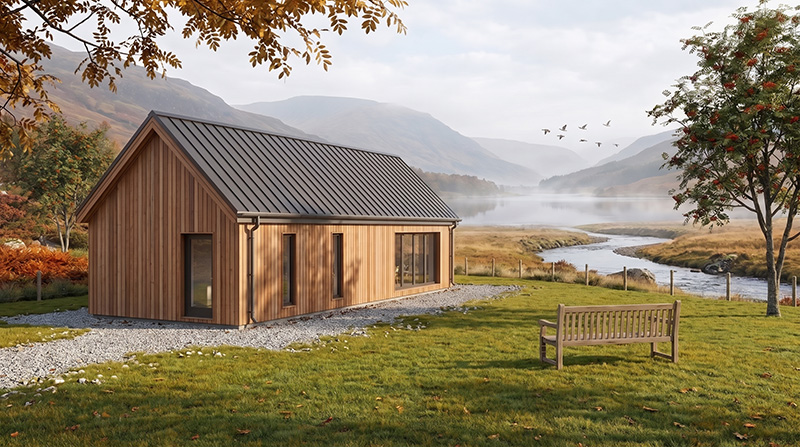
A fledgling housebuilding firm is on a mission to make regenerative design and build a more commercially viable prospect in Scotland.
Bridge of Allan-based Hoose has already earned award recognition for its innovative approach to designing timber homes that respond positively to their surroundings and comprise of natural, carbon-storing materials.
The company has developed an integrated Land-to-Living® process, which combines the early assessment of land, design, planning, construction, and renewable energy.
The business was officially launched earlier this year, though can trace its origins back to 2020 when founding directors Stuart Gee and Lindsay Neill – who have a combined 60+ years’ experience in the construction sector – met and expressed their dissatisfaction with certain aspects of the industry. They had the idea of setting up their own venture and have now assembled a team capable of delivering their vision of designing and building high-performing sustainable properties that bring long-term value.
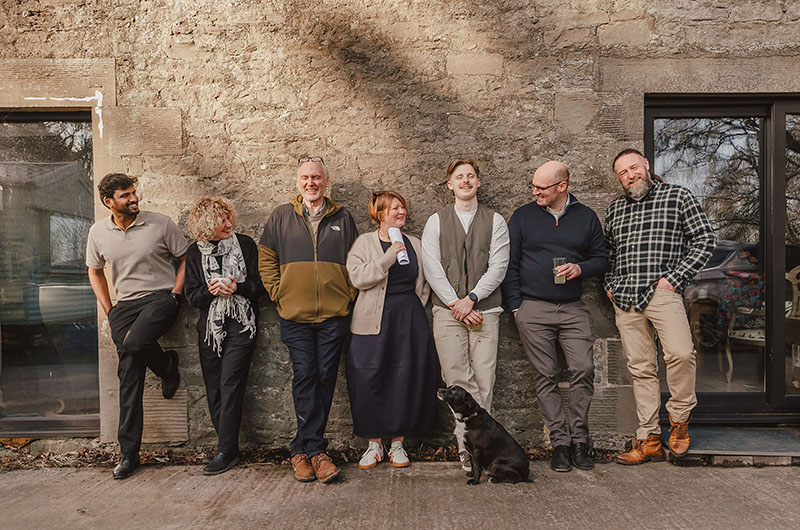
“We’re a regenerative design and build business,” Hoose’s brand and communications director Susi Sinclair told Project Scotland. “Our focus is on low-energy timber frame buildings using natural carbon-storing materials, with renewable energy considered as part of that overall design. We’re really interested in building healthier, comfortable buildings that perform well over time and will respond to their surroundings.”
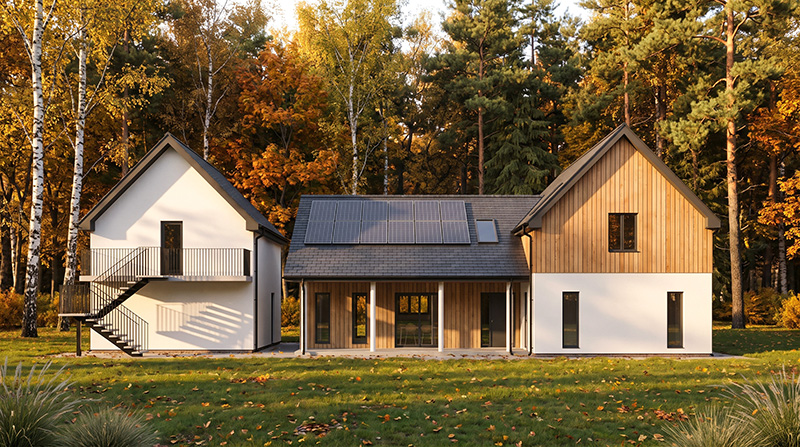
Hoose has developed five different house types, ranging from 1-4 bedrooms, and can also provide custom builds where the firm can help guide clients through the entire self-build process, from concept to completion.
At the time of interview, Hoose was in talks with a number of potential clients including a 400-acre site in rural Perthshire looking to develop land and build small hamlets that support biodiversity; a developer who plans to build dozens of rental properties in Ayrshire; as well as commercial businesses and individuals looking for self-build homes.
“From a growth perspective, over the next five years we want to significantly increase our capacity to deliver regenerative homes across Scotland,” Susi added. “Ultimately, what we want to do is make regenerative design and build a more commercially viable prospect for businesses and individuals.
“We’re interested in getting in front of the Scottish Government and trying to change how we build houses. The current status of houses isn’t good enough for the changing climate. Our biggest goal is addressing the housing crisis in Scotland at the moment and delivering in response to the changing climate that we have.”
Despite only launching this year, Hoose has already captured the attention of the local business community and secured a hat-trick of award wins. The firm won The HEAT, a Dragons’ Den-style competition for the Forth Valley region organised by Ceteris. This involved having to deliver two pitches and answer tough questions from four business leaders. The package of prizes included three months of advertising on Central FM alongside business support, mentoring and leadership training. Hoose was also named Innovator of the Year as part of Forth Valley Business Week 2026 and came top in the Green Innovator category at the 2026 Stirlingshire Business Awards.
The innovation that Hoose has been recognised for includes a mobile factory that is currently in development. The idea is to bring precision manufacturing and modern methods of construction directly to site while at the same time reducing transport-related carbon emissions and energy usage.
Susi explained that while Hoose properties would be suitable for urban locations, the main focus is rural settings. The company will also be working with architects retrofitting terraced houses by building internal frames.
Typical materials used in Hoose projects will include sustainably sourced timber, offering a natural, low-carbon building solution, and Sisalwool, a high-performance insulation made from natural fibres. The properties will also feature the latest renewable technologies and data centres, which will monitor the performance of the homes and alert users to any potential issues so that they can be remedied before they become a problem.
One overriding factor in all Hoose projects will be a commitment to leaving the land in a better place than it was found.
“We want to make sure that we leave capacity for wildlife and biodiversity,” Susi said. “We want to make sure that the buildings are positioned in a way that they get the most natural sunlight. It’s about how the buildings are protected but also how the land around it is protected from the building work.”