

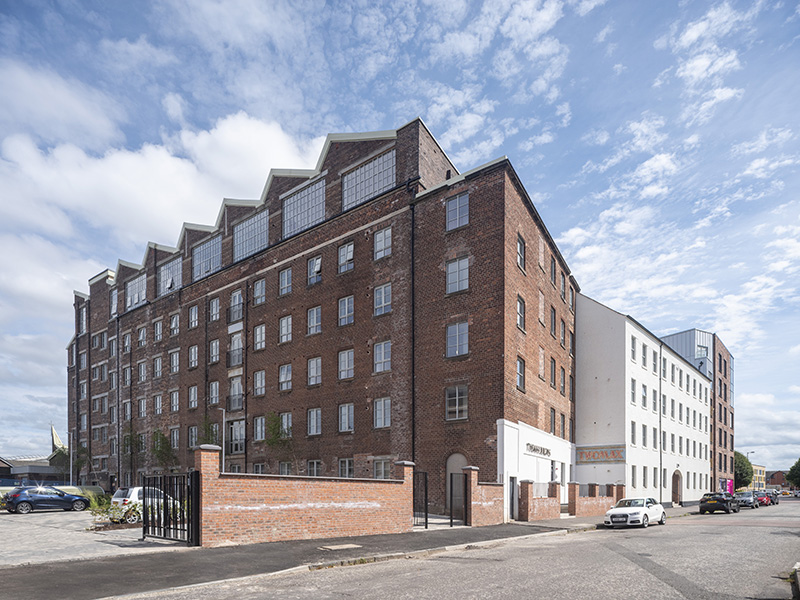
The Cottonyards, in Glasgow’s New Gorbals, is an example of using existing building assets to create new housing stock, transforming the C-Listed Twomax Mill into high-quality apartments while retaining the character of the building. John Lovatt, head of marketing communications and brand at Ibstock, explores the role of thoughtful urban regeneration in creating new housing, as well as the importance of using materials that complement the heritage of existing buildings.
WITH figures from Homes for Scotland showing the Scottish Government has fallen short of its ambition to increase tenure housing delivery by 10% year on year, with new home completions down 11% on the figure recorded in 2025, there is a clear need for effective intervention to ensure Scotland’s housing stock doesn’t continue to shrink. While the Labour UK Government has placed a renewed emphasis on housebuilding, affordable homes and a ‘place first’ approach to regeneration, there is an opportunity for Scotland’s historic buildings and urban centres to help address housing demand while revitalising established communities.
For contractors and developers, the challenge here is delivering new housing that meets modern requirements while respecting the architectural heritage and character of the places in which they sit. Scotland’s National Planning Framework 4 (NPF4) reinforces the importance of this approach, with Policy 7 – Historic Assets and Places – putting the protection, reuse and enhancement of existing buildings and local character at the heart of the statutory spatial strategy.
This calls for developments that respond to local architectural styles, built form and context, with material choice playing a role in creating distinctive places. Developers in Scotland also need to be mindful of the Natural Environment Bill, which mandates that hollow swift-nesting bricks be installed in all new buildings – ‘where reasonably practicable and appropriate’.
The Cottonyards, part of the wider regeneration of Glasgow’s New Gorbals, provides a strong example of this approach. The development delivers 100 apartments alongside the restoration of the Category C-Listed Twomax Mill. Dating back to the early 1820s, the historic mill’s original brickwork and industrial character provided an important reference point for the development.
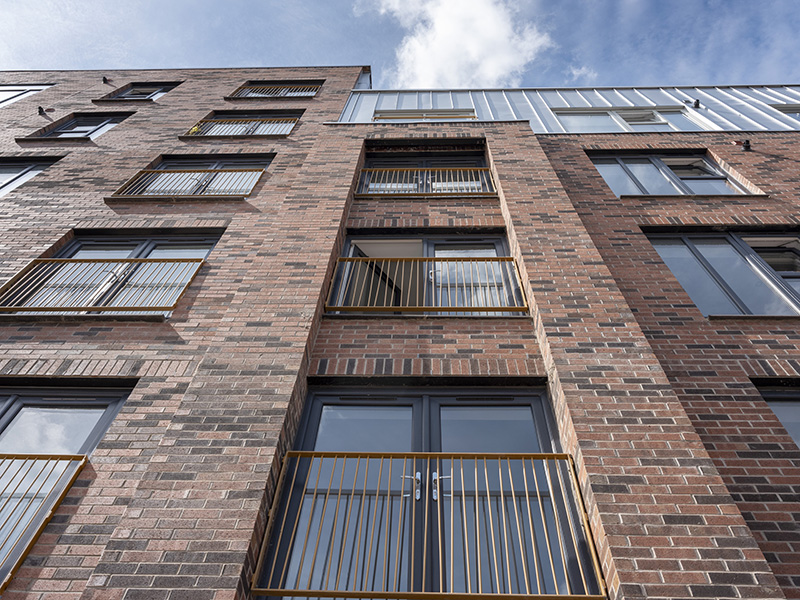
Alongside the retained mill, the new-build element needed to establish its own contemporary identity while strengthening its relationship with the surrounding area. Here, the material palette played an important role, with warm red multi-brick and brick detailing drawing on the character of the historic building without simply replicating it.
This scheme was central to reactivating a long-dormant industrial asset, breathing new life into a building that once contributed significantly to the area’s economic and social development. Through the intuitive reuse of the early 19th century mill (formerly a cotton spinning facility and later a major clothing factory), developers were able to preserve an important piece of Glasgow’s industrial heritage without removing any sense of place or identity.
Clay brick was key to this, linking old and new through a coherent material palette. The retained mill’s original brickwork offered a reference point, which informed the use of warm red multi-brick for the new-build areas.
As a result, The Cottonyard is a great example of how sensitive heritage-led design and strategic new development can unlock the potential of underutilised sites, driving urban regeneration. This work not only preserved Glasgow’s industrial past, but reinterpreted it for a sustainable, connected and inclusive neighbourhood that supports long-term urban prosperity.
There is no better material when looking to blend the old with the new than clay bricks. A material with centuries of proven performance and seeing use across many of the buildings seen in town and city centres, they offer a range of benefits. From its inherent durability and colour stability to its resistance to weathering, clay bricks stand out as one of the choice solutions for urban regeneration projects.
As one of the UK’s leading brickmakers, Ibstock is well positioned to support contractors and developers delivering new housing in these increasingly unique scenarios, including several factories producing high-quality heritage or handmade clay bricks using materials and techniques cultivated over centuries of production experience. In addition to this, the manufacturer offers a wide range of brick designs, including special shaped bricks, eco-habitats and brick-faced components, manufactured in the UK, with a portfolio that can contribute to the creation of developments that respond to their surroundings – while meeting the aesthetic and performance requirements of modern construction.
As well as this, Ibstock offers a range of services, from direct technical support helplines to guidance on installation patterns, assisting contractors and developers throughout the entire construction process.