
HUB East Central Scotland has published its 2025–26 annual report, highlighting a £1.2 billion portfolio of investment in public infrastructure and £57.8 million of social and local economic value generated.
The report showcases the scale and impact of hub’s work with public sector partners, with £843 million of infrastructure now open and operational, £191 million under construction, and a further £250 million in development.
During the year, hub projects supported 158 local jobs, delivered 1,231 apprenticeship weeks, and 1,377 training weeks on site, alongside 2,192 hours of careers advice and education engagement. A further 335 hours of volunteering were provided and £235,394 donated to community projects.
The report shows that 55% of SMEs involved in hub projects were based within the territory and 90% were Scottish. Initiatives including Meet the Buyer events and the Build Fife programme are designed to help local businesses understand procurement opportunities and compete for work, with the Build Fife model set to be rolled out to other parts of the region.
Hub East Central Scotland has also invested £3.78 million through its enabling funds to help partners develop new projects. This includes a feasibility study for Fife Council examining the potential for solar panel installations across 60 sites.
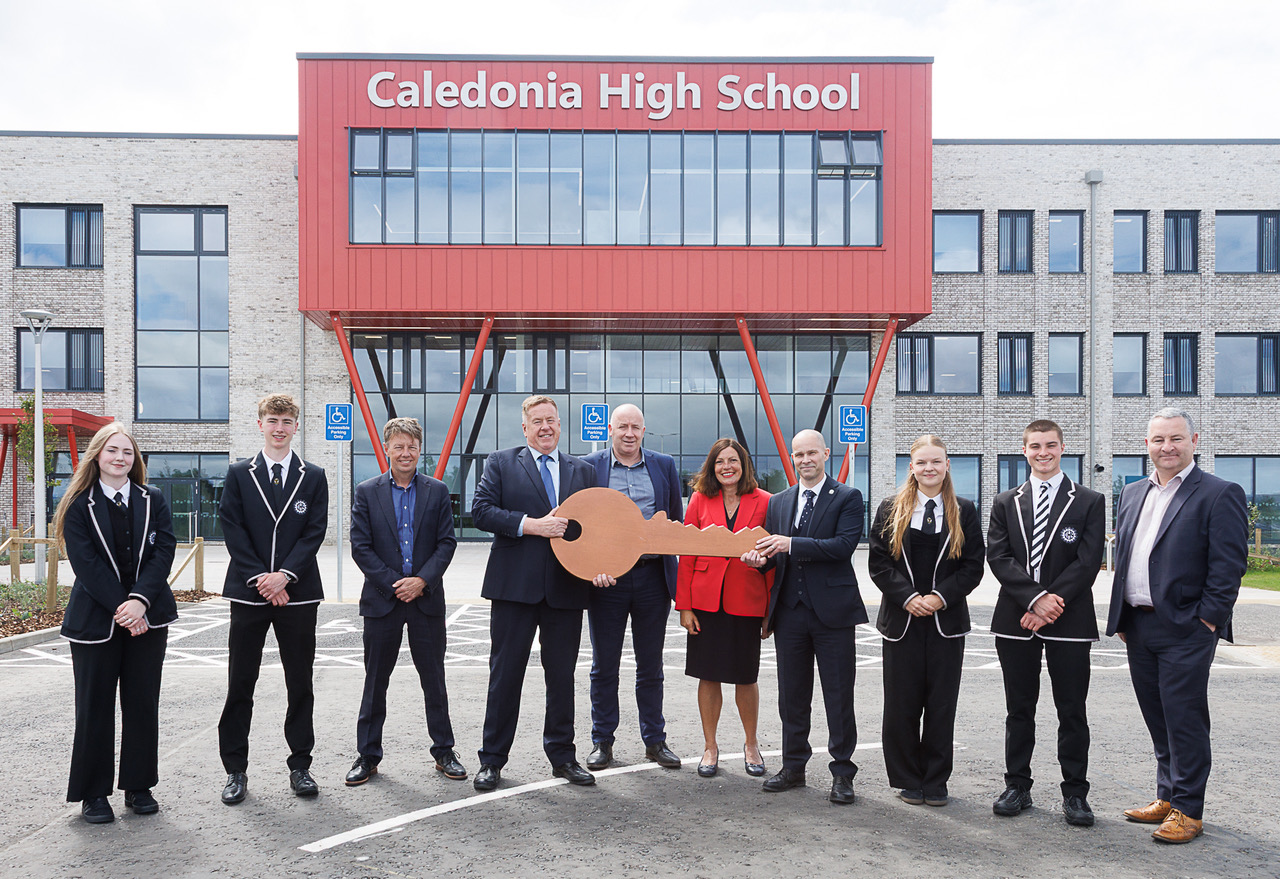
Major projects featured in the report include the £77 million Caledonia High School, £65 million Alloa Wellbeing Hub and Lochies School, £21 million Callander Primary School, and £12 million Templehall Community Centre.
Jayne MacLennan, chair, hub East Central Scotland, said, “This year’s annual report demonstrates the strength of the partnerships we have built across the region and the difference that investment is making in our communities. Our role is not simply to deliver buildings, but to help our public sector partners turn their vision into projects that create opportunities, support local economies and deliver lasting social value.
“The strength of our £1.5 billion development pipeline is a clear indication of the continued confidence in the hub model and gives us an exciting opportunity to build on what we have achieved, delivering high-quality infrastructure while ensuring that investment creates the greatest possible benefit for communities.”
Chief executive Brian Craig added, “Our focus continues to be on delivering tangible outcomes that improve the lives of the communities that we serve. Every project that we deliver is designed to create lasting social and economic value. Close collaboration with public sector partners remains central to our approach, creating a shared platform for investment, innovation and regional leadership.”