

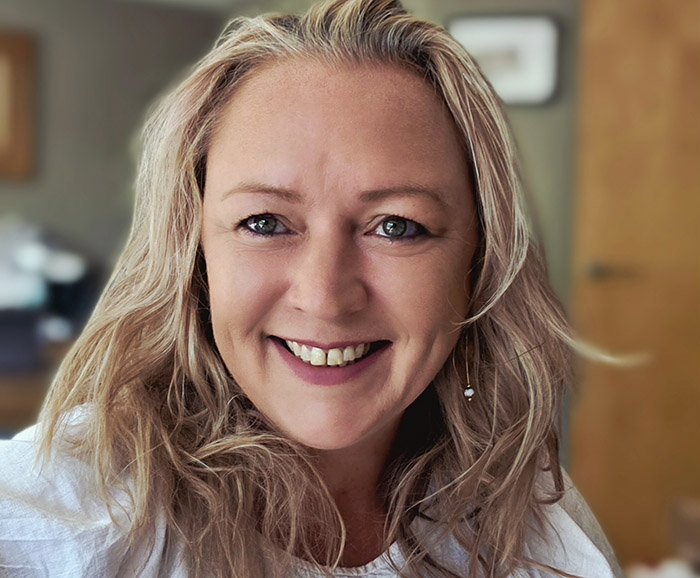
Pauline Smith, chief executive at Development Trusts Association Scotland, says community ownership is a practical response to urban, rural and island need
SINCE 2000, community land ownership in Scotland has nearly quadrupled, growing from just over 50,000 hectares to more than 200,000. It’s an impressive shift, and reflective of what happens when communities have the power to shape the places they live.
At DTAS, through our Community Ownership Support Service, we work with development trusts and community organisations across the country as they fill the gaps left when public and private organisations step back. We see first-hand the transformational impact community ownership can have, but we also see the barriers that continue to hold communities back.
If Scotland is serious about land reform, then communities must sit at its centre and not at the margins.
Community ownership is not an abstract policy idea. It is a practical response to local need.
Across urban, rural and island communities, development trusts are stepping in where public and private organisations have withdrawn. They are taking on empty buildings, neglected land and redundant assets. They are doing this, not for profit, but for purpose. Once acquired, these spaces become youth centres, childcare facilities, training hubs, transport services, affordable housing, cultural venues and green spaces.
Through our support work, we see how community ownership creates local jobs, supports local businesses, keeps wealth circulating locally, and provides services that would otherwise disappear. These outcomes are not incidental; they are the direct result of communities having control over local assets.
Despite this progress, vast areas of land and derelict buildings remain in public and private ownership. The potential of community-driven change is being held back and without meaningful reform, Scotland risks letting it slip away.
The current system is holding communities back
For many development trusts, we’re all too aware the journey to land or building control is far from straightforward. The current system leaves locals fighting uphill battles against hidden ownership and underinvestment.
Even when land or buildings come onto the market, communities face additional obstacles: speed and finance. Purchasing funding is limited, timescales are tight, and communities are routinely outbid by private buyers able to move faster and pay more. Opportunities are lost, buildings remain vacant, and value generated from Scottish land flows out of local economies.
Across Scotland, land and buildings continue to deteriorate – not because communities lack ideas or energy, but because the current framework makes it too difficult for those who would put assets to productive use to acquire them.
Reform that would unlock community potential
In our recently published manifesto, DTAS sets out clear, evidence-based reforms shaped by our direct experience supporting communities.
First, communities must have first refusal when land or assets are put up for sale.
While the Community Empowerment Act has helped normalise asset transfer, public bodies are encouraged, not required, to engage communities before assets reach the open market. In practice, this often comes too late. If communities are to compete fairly, legislation must ensure they are given a genuine opportunity to buy before private bidders dominate the process.
Second, purchasing powers must be strengthened and easier to trigger. This is particularly urgent in urban areas, where existing rights are harder to use and poorly suited to dense, complex ownership patterns. Communities need clearer, more accessible routes to intervene where land or buildings are vacant, derelict or being actively held back from productive use.
Third, Community Right to Buy (CRtB) and asset transfer legislation must be updated.
The current review of CRtB is a critical moment. While the principle of registering an interest in land not for sale is powerful, the process is often overly complex, with high thresholds and procedural barriers that deter community groups. Loopholes that allow landowners to avoid engagement undermine the intent of the legislation. If Scotland wants community ownership to grow, these barriers must be removed.
Finally, long-term investment in support is essential. Acquiring an asset is not the end of the journey, it is the beginning. A sustainable infrastructure of community owned assets is within everyone’s interest. Achieving this not only means making the process of acquisition easier, but ensuring sustainable access to funding and expert support to help communities adapt to the constantly changing environment. Without this, even successful transfers can be put under strain.
Signs of progress and looking ahead
There are positive signs of moving forward. The recent Scottish Government pilot is enabling communities to lease publicly owned windfarm sites approaching repowering through a protected window in the Community Asset Transfer Scheme. It demonstrates a willingness to rethink how public land is used.
This approach recognises that communities can manage land differently and often more effectively. But to deliver real change, this mindset must be expanded beyond individual pilots and specific asset types.
Land reform is not just about ownership. It is about power, opportunity and long-term resilience.
Development trusts across Scotland are already demonstrating what is possible when communities are trusted. Delivering social, economic, cultural and environmental benefits that extend far beyond the assets themselves. Through our Community Ownership Support Service, we see daily how much more could be achieved if legislation, hidden ownership and financial barriers were removed.
The current review of CRtB provides a window for meaningful change. With stronger rights, clearer processes and sustained investment, Scotland can build a land and assets system that works for communities.
The opportunity is there. The evidence is there. What is needed now is continued and strong political will to ensure Scotland’s land delivers lasting benefit for the people who live and work on it.