

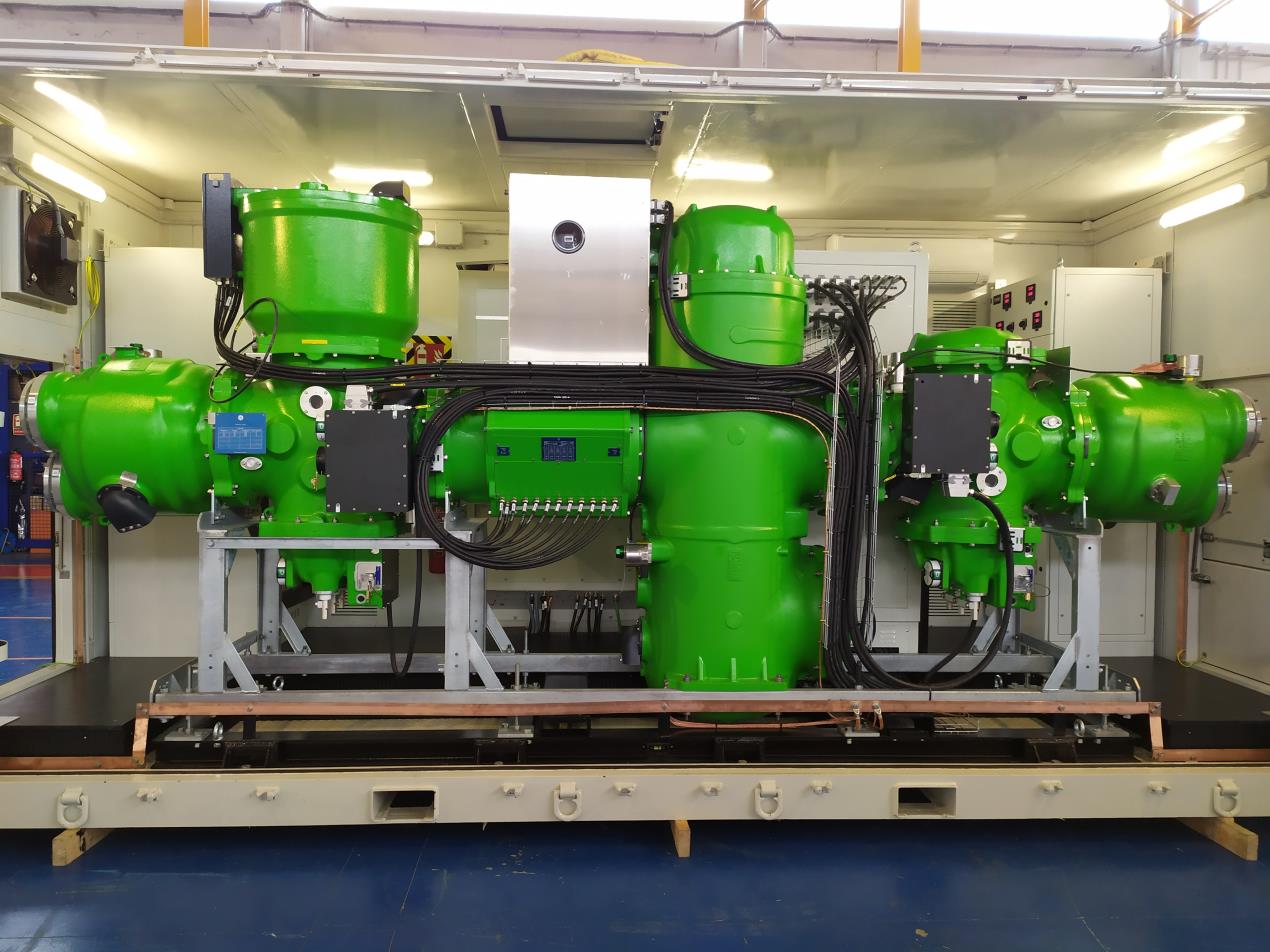
SSEN Transmission has unveiled new standardised modular substations that it says gives advantages over traditional methods.
Designed to operate at 132kV and 33kV, the modular substations are ideally suited to smaller‑scale grid connection projects – including individual windfarms and other renewable generation.
By carrying out much of the construction in controlled factory environments, modular substations offer clear benefits over traditional builds, SSEN explained. This includes a standardised and repeatable design resulting in a smaller site footprint and less time spent on site. This reduces costs and disruption for local communities while still meeting the high safety, quality and reliability standards required for critical electricity infrastructure, it added.
SSEN Transmission has awarded a major framework agreement to Hitachi Energy UK Limited and GE Vernova, enabling the delivery of modular substations following a year-long competitive tender process.
Rob McDonald, MD of SSEN Transmission, said, “Modular substations represent a revolutionary change in how we deliver customer connections, and SSEN Transmission is at the forefront of rolling this technology out across our network.
“By doing more of the work off‑site, we can improve safety, shorten construction times and significantly reduce the environmental impact of construction, including smaller site footprints and less disruption for local communities.
“Working collaboratively with our supply chain is central to that approach, and we’re actively exploring opportunities that could help support skilled jobs and build technical expertise here in Scotland.”
The modular substation programme forms part of SSEN Transmission’s wider drive to innovate and modernise how grid infrastructure is delivered, supporting the connection of clean, home-grown power while helping to meet national clean power and energy security ambitions.
Markus Heimbach, CEO, high voltage products business unit at Hitachi Energy UK Ltd, added, “In today’s environment, critical infrastructure has to do more than perform, it has to endure. The Integrated GIS Assembly is designed with that reality in mind.
“By enclosing EconiQ gas-insulated switchgear (GIS) within a robust, containerised structure, the IGA protects vital assets from the elements, from interference, and from deliberate damage, while maintaining exceptional reliability. EconiQ SF6-free technology is as reliable and scalable as the conventional solution and delivers the lowest carbon footprint. It allows substations to be delivered as complete, tested systems, ready to operate safely and securely.
“This approach gives network operators greater resilience, faster recovery and confidence that their infrastructure can continue to serve communities even during periods of disruption and uncertainty.”
Clar Collins, executive MD north south Europe region, grid systems integration at GE Vernova, commented, “We’re honoured to have been chosen by SSEN Transmission for this important modular substation programme. By combining modular delivery with GE Vernova’s g³ technology, part of our GRiDEA SF₆ free solution portfolio, this programme is designed to provide faster, lower-impact renewable grid connections, with more of the work completed off site before installation, while supporting cleaner energy.
“We look forward to working in close collaboration with SSEN Transmission to help deliver sustainable and reliable grid infrastructure that supports Scotland’s renewable energy ambitions and strengthens energy security.”