

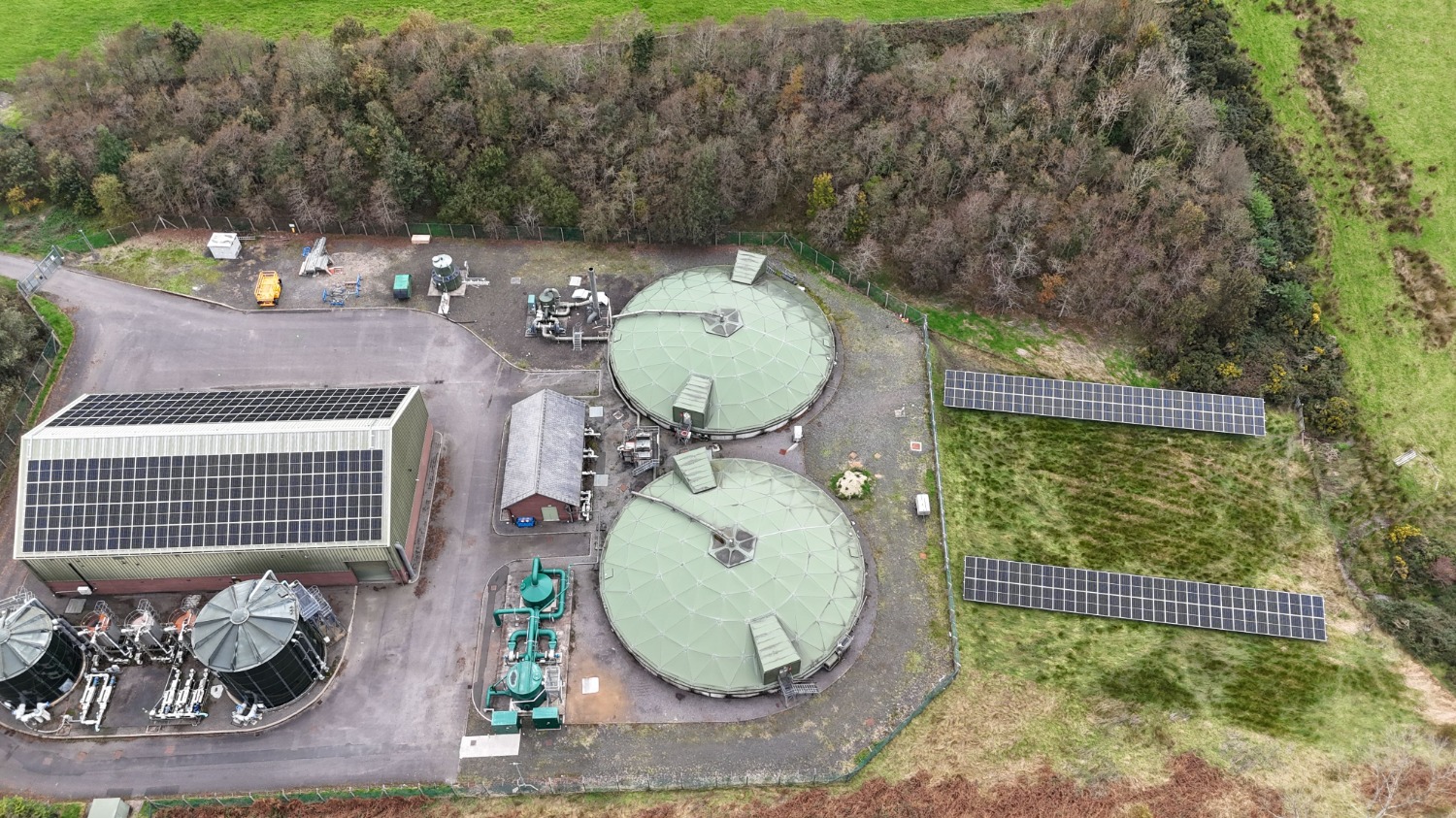
TWO new Scottish Water solar schemes are helping to power essential water and waste water services on the Isle of Bute.
At Loch Ascog Water Treatment Works, a £300,000 scheme has seen 372 roof and tank top mounted panels installed, which are generating around 0.19GWh of green energy annually.
Over 50% of the energy is used on site – meeting almost a third of the power needed to run the works – while the rest is exported to the national grid.
In addition, a £350,000 project at the waste water treatment works in Rothesay has been completed with 368 roof and ground mounted solar panels now in place. It will generate around 0.18GWh of green energy a year, with 73.5% used on site – providing a quarter of the power needed to run the treatment works.
Both projects will reduce the operational costs of running the sites and continue to deliver savings for over 30 years – providing resilience against the volatility of grid electricity prices, Scottish Water said. Together, they will also save around 73 tonnes of carbon dioxide equivalent each year.
The projects have been led by Scottish Water Horizons, the publicly owned utility’s commercial subsidiary, and delivered by R&A Group.
Scottish Water Horizons project manager Tom Clayton said, “It is great to see these projects complete and helping to generate renewable energy at two sites on the Isle of Bute now. Working on these sites was challenging as we had to manage the logistics of constructing the solar schemes in an island setting – that meant we were dependent on the ferry for the transportation of materials and personnel.
“Alongside getting the scheme to the island, we also needed to be mindful of its existing inhabitants, implementing protective measures for nesting oystercatchers and carrying out surveys for potential bat roosts.”
Scottish Water senior multifunctional operator Gordon Harvey added, “These renewables projects will help to reduce the running costs of the sites, ensuring that we are providing good value to our customers as well as helping to reduce the carbon associated with providing these essential services. Now the solar panels are in place, we are looking to introduce a range of biodiversity enhancements to the site in Rothesay including native tree and shrub planting, followed by the establishment of a wildflower meadow. To support local wildlife, we will also be creating a hibernaculum and installing both bat and bird boxes.”