

WINNING over the hearts and minds of Scotland’s youngsters holds the key to addressing the construction industry’s skills crisis and ensuring the sector has enough talent to deliver the nation’s ‘once-in-a-generation’ pipeline of infrastructure projects.
That’s the view of Stephen Slessor, chief executive of water technology specialist RSE, who believes the industry cannot simply rely on government to provide the necessary workforce or ensure young people have knowledge about the ‘generational’ opportunities on offer. His comments came at a recent gathering in Edinburgh, featuring key stakeholders from across the Scottish infrastructure ecosystem.
The drinks reception, hosted at The Signet Library on Parliament Square, was designed to provide a relaxed and informal platform for clients, contractors, consultants, investors, and skills bodies to come together to have honest conversations around what is required to rise to the challenge at a time of immense investment in major water, energy, transport, housing, and digital schemes.
Muir of Ord-headquartered RSE organised the event in collaboration with Hercules PLC, a provider of vetted construction workers to large-scale infrastructure projects.
Attracting over 65 leaders from across the construction and built environment sectors, discussions centred on how the industry can solve skills shortages amidst unprecedented demand – with over £100 billion worth of planned projects in the Highlands alone.
“This is generational – I’ve never known a point in time where there’s so much work,” Stephen told Project Scotland during the event. “This is an opportunity to believe in a lot of young people – and we owe it to them.”
Citing the near one million youngsters not in education, employment, or training in the UK, Stephen explained that, in his opinion, the current trajectory is not sustainable.
“When I think about some of the biggest social challenges Scotland’s facing just now, construction is a route out,” he continued, before showing Project Scotland a photo of himself digging a trench as a self-confessed directionless 23-year-old labourer. He’d later climb the ranks at Galliford Try, ultimately becoming MD of its environmental division before leading RSE.
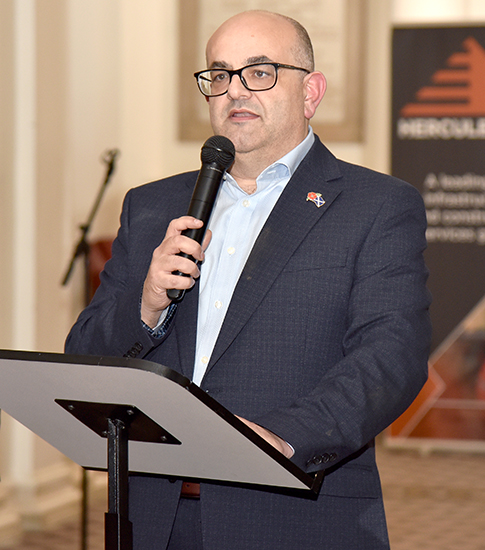
“There aren’t many industries that offer the progression routes that this one does,” he added. “Young people are under a lot of pressure when it comes to their future.
“One of the challenges with young people and understanding opportunities is that they’re very, very heavily influenced by their parents…we need to work harder and win hearts and minds around what construction is, where it’s going, why we need these people, and what that career could be for them. This industry offers so many opportunities for people in ways they’d never expect.”
RSE teamed up for the Edinburgh gathering with Hercules PLC, the Cotswold-headquartered firm which opened a base in Motherwell in late 2025 and has ambitions to open a dedicated Scottish training academy.
“Hercules is growing at a rate of knots (in Scotland),” Stephen said. “They’re a progressive company; they do things differently. I think we need that bit of disruption here – and if you’ve got a business that wants to invest in people, whether they’re young or old, Hercules has a track record in doing that. It’s something we need in Scotland.”
Specialising in providing vetted construction workers to major projects, Hercules deploys over 2,000 workers daily to sites across the country using a digital recruitment app. On HS2 alone, the business has supplied over 700 workers.
“Our aim is to have a really good presence in Scotland,” Brusk Korkmaz, founder and CEO of Hercules, told Project Scotland. “We want to invest – potentially opening up a training centre in Scotland.”
The firm’s Warwickshire training centre opened two years ago and has since had over 2,500 people pass through. “We want to replicate that in Scotland,” Brusk added. “That would be amazing for the Scottish workforce, particularly the youngsters.”
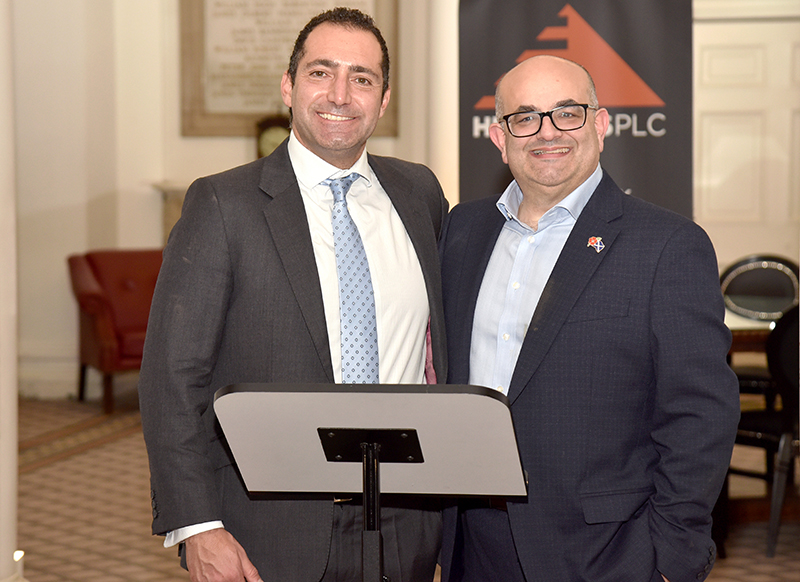
Underlining the need to work to the specific requirements of the Scottish construction sector, Brusk and Stephen both delivered keynote speeches before making their way around the room and picking the brains of attendees.
A largely casual gathering, attendees weren’t confined to set tables – meaning individuals naturally drifted away from company colleagues. By the time Stephen arrived to gather thoughts on the skills shortage, the event’s set up had fostered an entirely unique lineup of leaders from different organisations in various groups. This dynamic led to invaluable perspectives that may not have been possible if not for the event’s format.
“We need to get people together with a common interest, get talking about this, and come up with concrete actions,” Stephen explained. “I think the sector will be defined by what it doesn’t do, rather than what it does do. I want to see this country succeed how I know it can. Government’s never going to help; they’ll try and do things to make it easier – but the only people who can help us is ourselves.”
Responses from those in attendance will now be collated ahead of the next steps in developing practical solutions in the ongoing industry-led drive to address the skills shortage.