

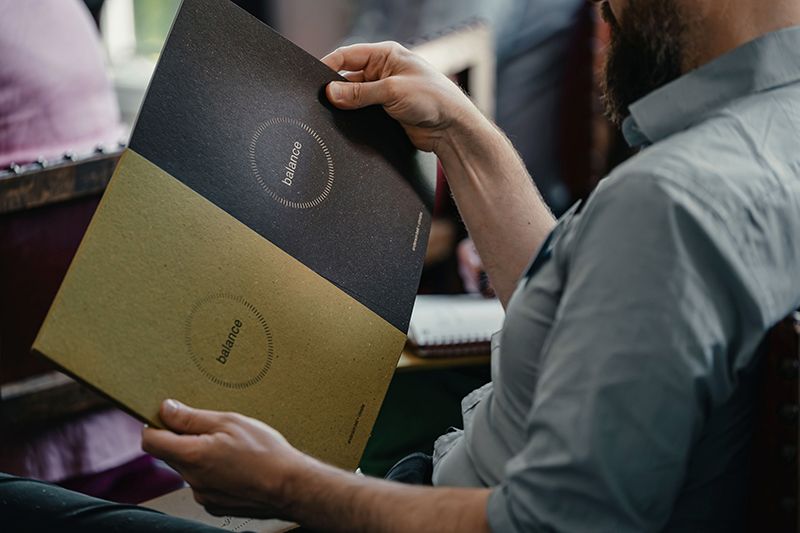
ARCHITECTURE and urbanism practice abc has launched Balance, a new carbon planning service designed to help local authorities, planners, developers and housing providers understand the relationship between carbon and place.
By quantifying whole-place emissions, testing alternative futures and evaluating nature-based solutions, Balance aims to provide the evidence needed to shape more sustainable communities and make informed planning decisions.
The service was formally launched at the Balance Symposium 2026, held in Glasgow, bringing together planners, policymakers, developers, housing providers, academics and industry leaders to explore how carbon evidence can support the delivery of Scotland’s net zero ambitions.
Developed following two years of research with the University of Strathclyde, Innovate UK and Scottish Enterprise, Balance is described as the first holistic service of its kind to calculate and analyse carbon across every aspect of place, from buildings and infrastructure to transport, green space, water, waste and energy.
Built on a premise that net zero places require better evidence, Balance measures and visualises carbon across entire settlements, neighbourhoods and development sites, bringing together buildings, transport, energy, infrastructure, landscape and ecology within a single evidence framework. This enables decision-makers to understand not only where emissions are generated, but how spatial planning and design choices can reduce them.
The service enables users to understand the full carbon impact of development, test design and policy options, and identify practical pathways towards carbon balance. It also assesses the contribution of nature-based solutions such as tree and hedge planting, helping organisations evaluate carbon sequestration alongside wider benefits including biodiversity enhancement, urban cooling, air quality improvement and flood-risk mitigation.
One of Balance’s flagship projects is its work with Angus Council, supporting evidence gathering for the authority’s emerging Local Development Plan. The study quantified embodied and operational carbon emissions across housing, transport, energy and waste, while modelling the carbon sequestration potential of existing and proposed green infrastructure.
The resulting evidence base is helping inform future land-use decisions and translate net zero ambitions into measurable planning outcomes through to 2045.
Jonathan McQuillan, director at abc, said, “Scotland has ambitious climate targets and a planning framework that recognises the importance of sustainable places. The challenge is providing decision-makers with evidence they can understand and act upon. Balance helps connect carbon and place, showing how decisions about where we build, how people travel, how infrastructure is designed and how landscapes are managed influence our pathway to net zero. It enables planners, designers and developers to move beyond carbon reporting and actively shape lower-carbon, more resilient and nature-positive communities.”
Dr Fatma Pelin Ekdi, carbon consultant at Balance, added, “Local authorities have a crucial role in delivering net zero, but they need robust evidence to support policy and planning decisions. Balance provides a practical framework for understanding the carbon implications of development and demonstrating alignment with the objectives of NPF4. It helps translate climate commitments into measurable place-based outcomes.”
Rowena Statt, urban designer at abc, commented, “The Balance Symposium demonstrated a real appetite across the industry for practical, evidence-led approaches to net zero placemaking. We are seeing increasing demand for tools that move beyond carbon reporting and actively inform planning, design and investment decisions.”