
David Terradot-Piot, trainer in construction materials and the industry, UNICEM Campus, Bretagne, France, tells Project Scotland why a French investigation into marine biomass offers a practical framework for thinking about local secondary resources in Scottish construction
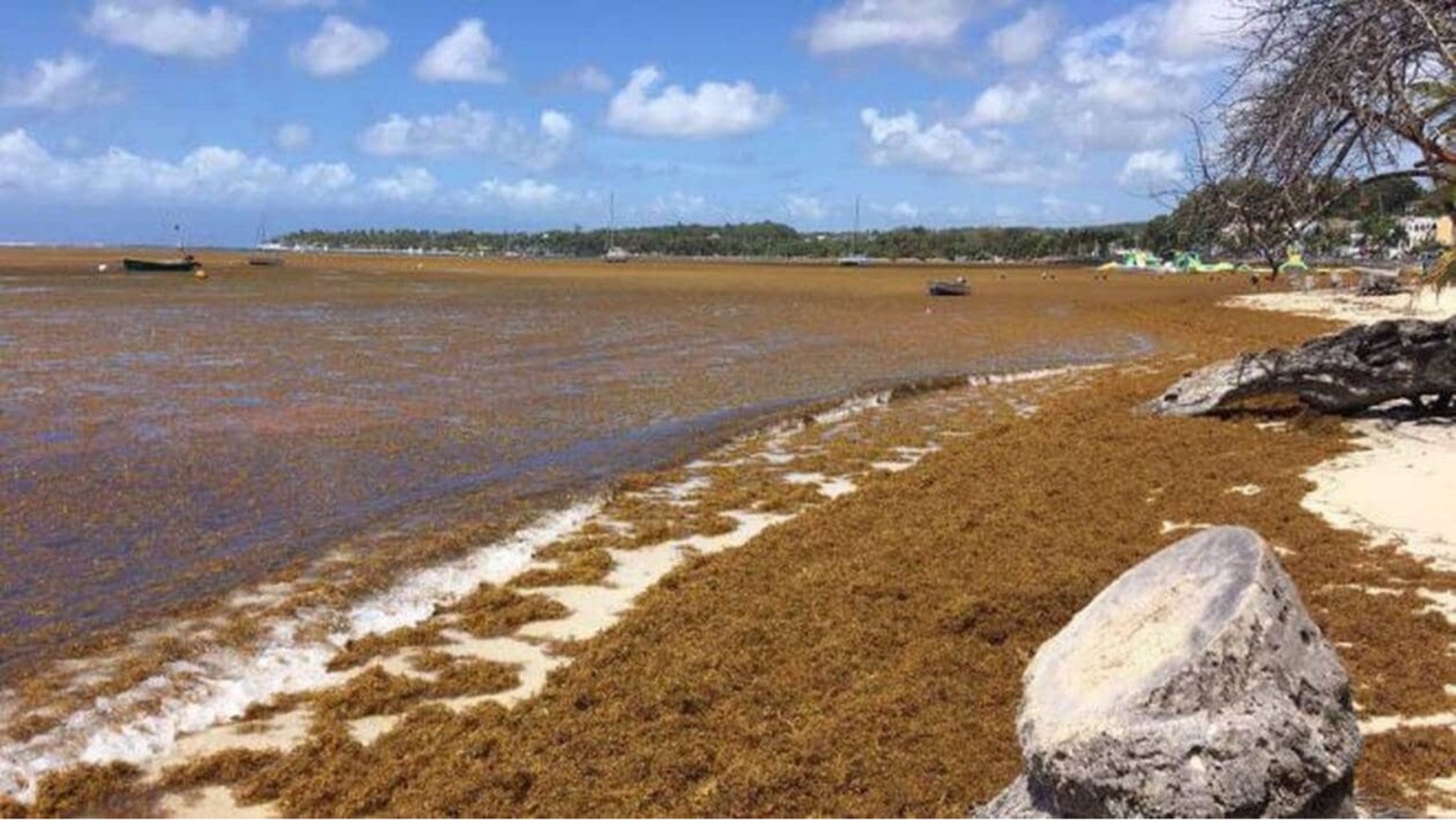
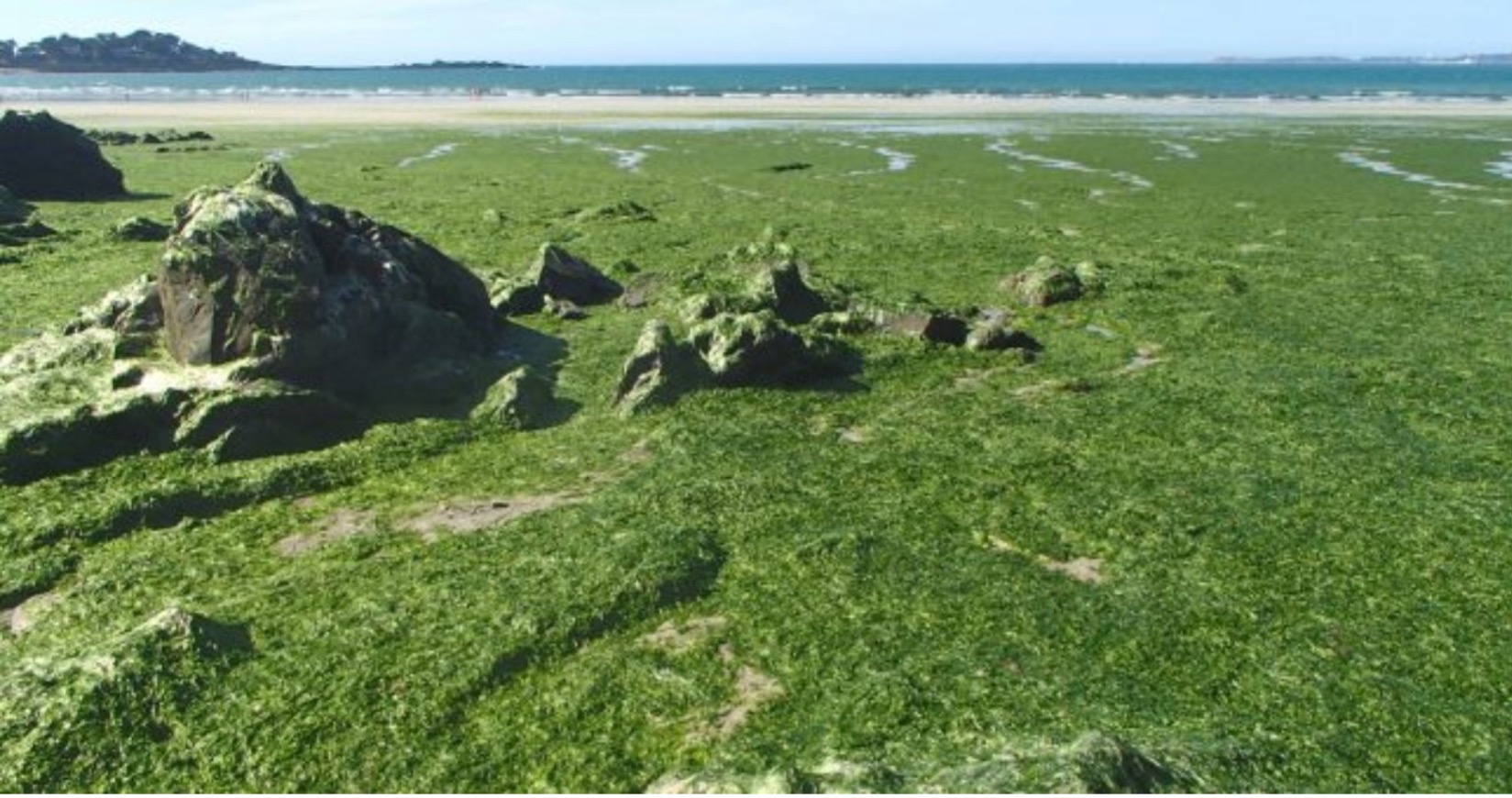
FOR coastal communities, stranded seaweed is first a management problem. It arrives wet, salty and mixed with sand, shells and debris. Collection is costly, transport is inefficient because much of the mass is water, and the material changes quickly after stranding. Yet once the biomass is removed from the beach, another question becomes possible: could part of it become a controlled secondary resource for construction rather than being treated only as waste?
My work in France began with green algae of the genus Ulva from the Brittany and Normandy coasts. It has since expanded to pelagic Sargassum from the French Caribbean. These are very different materials. Their mineral content, organic fraction, salt load and contaminants can vary, so every route has to begin with traceability and characterisation rather than treating all seaweed as one generic feedstock.
The practical question is therefore not whether seaweed can replace cement. A more realistic starting point is whether a carefully prepared fraction could act as a low-dose filler, a fine secondary constituent or part of a manufactured composite aggregate. That is less dramatic, but more useful for construction because it focuses on repeatability, safety and how a material would actually behave in a mix.
The first stage is preparation. Collected biomass has to be sorted and washed to remove sand, foreign matter and part of the salt load. For cement-based materials, chlorides are a major concern, particularly where steel reinforcement is involved. Washing must therefore be controlled and measured. The number of cycles, the water used and the chemistry of the treated biomass all matter. The wash water also needs attention, because a circular process should not simply transfer contaminants from a solid material into an untreated liquid stream.
The material can then be dried and ground to create a more stable and reproducible feedstock. Drying gives a reliable basis for dosing; grinding allows the material to be tested as a fine constituent rather than as a fibrous biological mass. A second route is thermal treatment, producing an ash or biochar-type material. This can reduce the organic fraction and alter porosity and surface characteristics, but it also consumes energy. It only makes sense if the resulting material is genuinely more useful and controllable.
Sargassum adds another challenge: arsenic. The route cannot therefore be assessed only through compressive strength or workability. The destination of contaminants must be understood through the whole process, including wash water, thermal residues and the hardened material. Leaching and environmental safety sit alongside conventional concrete tests. A stronger specimen is not a successful result if the contaminant pathway remains unresolved.
Only after preparation and characterisation should concrete testing begin. A reference mix can be compared with low incorporation rates while keeping water-to-binder ratio, cement content, aggregate grading and curing as consistent as possible. Fresh properties such as workability and density come first, followed by strength and basic durability indicators. Water absorption is important because a porous algal-derived powder can change the effective water available to the mix and make production control more difficult.
This cautious approach is directly relevant to a Scottish construction readership. The opportunity is not to import wet French seaweed to Scotland, which would make little practical or environmental sense. The transferable element is the method: identify a local biomass or waste stream, understand its chemistry, stabilise it, test it at low dosage and reject it if the evidence is not good enough. The same logic can be applied to other locally available secondary resources.
For Scotland, the industrial question is as important as the laboratory one. Wet biomass is expensive to move, so any credible system would favour local draining and pre-treatment before transport to a materials facility. Drying energy, freshwater demand, grinding and thermal processing would have to be counted in the environmental balance. A route requiring long-distance haulage or excessive energy could lose the circular-economy benefit it was intended to create.
A Scottish pilot would not need to begin with a high-value structural application. Early screening could start with mortar or another controlled test system, where small quantities can be compared before any wider use is considered. If workability, strength, durability and environmental behaviour are acceptable, the programme can move forward step by step. If not, the material can be redirected rather than forced into concrete.
There is real value in negative results. If chlorides remain too high, water demand becomes excessive, durability falls or contaminants cannot be safely controlled, the material should be rejected or redirected. Circular economy thinking is strongest when it includes clear stop criteria. The aim of the French programme is therefore practical: define the conditions under which treated marine biomass might become a traceable secondary construction material, and the conditions under which it should not.
For Scottish construction professionals, the wider message is that innovation may sometimes begin outside the traditional materials supply chain. A material washed ashore as a coastal nuisance could, after the right processing and verification, become one small part of a more local and circular construction system. The key is not the novelty of using seaweed; it is the discipline of turning a variable waste stream into a material that can be specified, tested and, only if the evidence supports it, used with confidence.