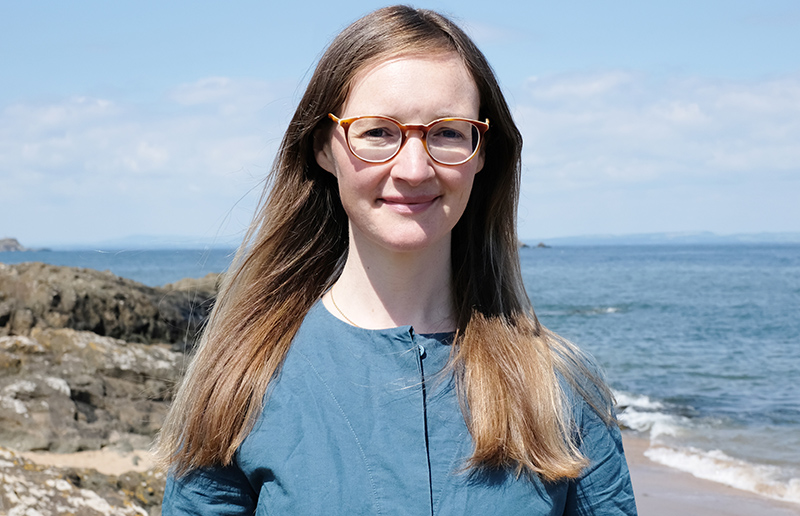

Sarah Lewis, co-director, Passivhaus Trust, tells Project Scotland about the current UK landscape on Passivhaus construction and explains why Scotland is central to the positive momentum
Q) How would you sum up the Passivhaus landscape in the UK at the moment?
A) There is a huge amount of positive Passivhaus momentum at the moment, coming from a number of directions. Scotland has been central to this momentum. 60% of new schools in Scotland are targeting Passivhaus, thanks to an innovative funding mechanism introduced by the Scottish Futures Trust. Projects receiving funding from SFT need to meet a very clear energy target and funding may be reduced if the school buildings do not perform as designed in post-occupancy monitoring.
Many local authorities have been opting for the Certified Passivhaus route to guarantee good building performance, and therefore de-risking the funding. The Scottish Government has also committed to developing a Passivhaus Equivalent policy for all buildings, which is a powerful recognition of what the Passivhaus standard and methodology can deliver, and is having a ripple effect across the UK and world.
The positive Passivhaus momentum that we’re experiencing is also coming from endorsement and acknowledgements from a wide range of disparate organisations:
- The health benefits of Passivhaus have recently been publicly acknowledged in the Introduction to Homes England’s Healthy Homes guidance published in November 2025. ‘Passivhaus is a well-established design and quality assurance system aimed at reducing energy demand, addressing the ‘performance gap’ of new buildings, and improving comfort levels for residents. ….There is significant overlap between a Passivhaus approach and the aims of Healthy Homes’. The Passivhaus standard is cited as demonstrating best practice in relation to energy efficiency, indoor air quality and overheating. Social housing providers developing a project that is seeking Homes England funding will be able to demonstrate ‘good practice enhancements’ to the agency in these three key areas of Homes England’s Healthy Homes guidance by opting for the Passivhaus standard.
- Barratt, the UK’s largest volume housebuilder, announced in May 2025 that all of its new residential schemes in London will be built to meet or exceed the Passivhaus standard, a model they call Lo-E homes.
- In March 2026 it was announced that the Passivhaus standard is now deemed to satisfy certain aspects of the UK Net Zero Carbon Buildings Standard (UK NZCBS) at practical completion. Passivhaus certification is a deemed-to-satisfy route in the newly-launched Version 1 of the Standard.
There is also a strong multiplier effect from each Passivhaus project, with the benefits of Passivhaus doing a great job of speaking for themselves. Passivhaus delivers quality assured buildings that perform as designed, avoiding the ‘performance gap’. This de-risks projects and delivers assurance as to reliable energy bill savings year on year, a massive incentive for all building types – from swimming pools to student accommodation – as energy bills have soared in the last few years. The health benefits of Passivhaus, including summer comfort and good indoor air quality, are becoming increasingly acknowledged.
Q) What do you see as some of the biggest challenges in accelerating adoption of Passivhaus?
A) Regulatory barriers are still an obstacle, with building standards still setting standards very far off Passivhaus requirements and using different metrics. That is why the Passivhaus Trust is pleased that Scotland is proposing that Passivhaus will be ‘deemed to satisfy’ Scottish building standards – a proposal that will cut down on red tape for developers and help deliver outstanding building performance. The proposals for the ‘equivalent’ standard are also very positive in that they use the same metrics as Passivhaus and so can be measured against Passivhaus criteria.
Misconceptions about Passivhaus are one of the obstacles to be overcome. Our recent research paper on capital costs of Passivhaus over building regulations has shown a capital cost uplift ranging from 2-5%, a figure that would surprise many in the industry.
Lack of training is something that the Passivhaus Trust has identified as a potential obstacle. The Passivhaus Trust has set the ambitious target of getting Passivhaus adopted in 10% of all new housing projects within the next 5-10 years. We also want at least 50% of the industry to understand the principles behind Passivhaus. To achieve this, the Trust is offering expanded training in universities and colleges and a comprehensive Passivhaus Learning Hub to help create a skilled and experienced supply chain of certified designers/ consultants and contractors. To amplify the Passivhaus ‘multiplier effect’, Passivhaus exemplar projects are showcased through case studies, a projects map and Passivhaus Open Days, with online Passivhaus Client Clubs helping to guide housing providers through their Passivhaus journey.
Q) How does Scotland compare to the rest of the UK? Are you encouraged by what you’re seeing regarding Scotland’s proposed Passivhaus Equivalent policy?
A) The Passivhaus Trust is in the process of writing its detailed response to the Stage 2 consultation on the Scottish Passivhaus Equivalent policy. In our initial response to the proposals, we welcome the progress made by Scottish Building Standards to move towards a Scottish Passivhaus Equivalent policy. ‘The Trust is particularly impressed with the extensive and collaborative process undertaken with the wider construction industry across Scotland as part of the Working Group, set up and managed by the Scottish Building Standards team, that reached a consensus position from which these consultation proposals have been developed.’
The Passivhaus Trust welcomes the direction of travel laid out in the Consultation document and is very encouraged by several of the proposals including: Passivhaus to be ‘deemed to satisfy’ Scottish building standards; stronger focus on actual building performance, with use of absolute energy targets, including space heating demand targets and delivered energy targets; recognition of PHPP as a compliance methodology; and improved compliance and assurance mechanisms, as outlined in the proposed compliance handbook. We have also identified a number of areas that could be improved upon and will be submitting them in our detailed consultation response.
In terms of the rest of the UK, the London Plan developed for the Greater London Authority has been at the forefront of pushing high energy efficiency standards for buildings. The Draft London Plan, also currently out to consultation, will push projects built within the Greater London Authority (GLA) to go even further beyond building regulations. The Passivhaus Trust is very encouraged by proposals being put forward in the draft London Plan and the adoption of absolute targets, such as space heating demand and Energy Use Intensity.
Q) Are there still some myths/misconceptions around Passivhaus that you’d like to dispel?
A) You CAN open the windows in a Passivhaus! Passivhaus occupants always have the option of opening their windows, however exceptional indoor air quality is primarily maintained by the mechanical ventilation with heat recovery (MVHR) system, which eliminates the need for window opening in winter. With standard uncontrolled ventilation, bringing in sub-zero temperature air for ventilation is the only option on a cold winter’s day. In a Passivhaus, heat is recovered from exhaust air and used to heat the incoming air, providing fresh, filtered air at around 18 °C without active heating.
Passivhaus costs: The Passivhaus Trust has just published research demonstrating that the capital cost uplift of building to the Passivhaus standard can be little as 2% extra, and offers a range of co-benefits. The report, co-authored by Currie & Brown, Elemental Solutions, and the Passivhaus Trust, draws on previously published modelling of the capital costs of Passivhaus construction compared with current building regulations. The modelling suggests that the capital cost uplift from current regulations for a semi-detached house is 3–5% (£4,900–£8,500 per house), with mid-rise flats having an uplift of just 2% (£4,100–£5,300 per flat).
Q) Any recent milestones or standout Passivhaus projects that you think are worth highlighting?
A) Scotland’s mega campus at Dunfermline (the Woodmills and St Columba’s high schools) is currently the largest Passivhaus project in the UK. In its first year, energy bill savings were reported as £433,000.
In London, developer Urbanest has built a number of high-rise student accommodation blocks, with Urbanest Canary Wharf potentially about to take the crown for largest Passivhaus in the UK when certified. The Passivhaus Trust is finding that student accommodation is a rapid area of growth for Passivhaus, with notable large-scale projects in Bristol, Belfast and Manchester either completed or underway.
Oxford University’s Schwartzman building has recently been certified and opened by King Charles, and includes the world’s only Passivhaus certified concert hall.
Q) With retrofit taking on extra prominence in construction, what can you tell us about the use of Passivhaus in retrofit/refurbishment projects?
A) Passivhaus retrofit is a performance‑based approach to upgrading existing buildings to deliver much higher levels of comfort, healthier indoor environments and lower energy demand. It focuses on keeping heat in, fresh air flowing, and energy use very low. Passivhaus retrofit provides a framework for improving building performance.
Retrofit projects can be delivered by meeting the full Passivhaus Classic standard, or, more commonly, via the specialist retrofit standard, EnerPHit. Works may be completed in a single phase or carefully planned in stages over time. Our existing buildings must also be upgraded to deliver healthy, comfortable, affordable homes — and to avoid locking in poor performance for decades to come. Passivhaus retrofit, delivered through the EnerPHit standard, remains the gold standard for achieving these outcomes and offers a flexible range of approaches. The EnerPHit component method is presented as the primary and most widely applicable retrofit pathway, with the space heating demand method recommended for buildings with favourable form factor.
Passivhaus retrofit featured prominently earlier this year in the Channel 4 programme Guy Martin’s House Without Bills. Large-scale Passivhaus retrofit projects currently completed or underway include St Sophia’s primary school in East Ayrshire, the James Riley Point tower block for Newham Council, and the Firoz Laji Global Hub project for the London School of Economics.