
Tony Lawther, MD at commercial roofing and waterproofing contractor BriggsAmasco, examines the training and competence challenges facing the roofing sector amid increasingly stringent safety and energy regulations
WITH the Construction Industry Training Board (CITB) estimating the industry needs 206,000 extra workers, and roofers among the hardest roles to recruit for, the built environment is facing a considerable skills shortage. Compounding this, a shrinking pool of experienced tutors and unreliable access to college-led roofing courses are limiting the pipeline of new talent entering the sector.
Changes to building regulations and standards are also heightening the need to provide more trusted and accessible training for existing sector professionals. Designed to remove industry ambiguity, align with multi-functional roof uses and address building physics gaps, the amendments to BS 6229:2025 focused heavily on the clarification of roof drainage falls, the definition of modern, inverted warm and blue roofs, and the updating of fire safety.
As a result, the long-standing guidance to ‘design for 1:40 to achieve a minimum 1:80’ was removed. In its place is a statement that the minimum completed fall on most flat roofs is 1:80, with design falls derived from detailed survey data and/or structural analysis, as opposed to generic prescription.
With these amendments just the tip of the iceberg in regard to ever-more stringent regulations and standards, the importance of upskilling of industry professionals to close knowledge gaps, boost performance and align with fast-changing technologies and systems cannot be understated.
Optimised productivity and safety
Scotland’s construction industry faces the highest fatal injury rate in Great Britain, at 0.93 per 100,000 workers, making site safety a critical priority. Ultimately, safety and productivity are intrinsically linked. Safer sites experience fewer disruptions, reworks and costly delays. Upskilling workers and providing regular training on modern equipment, and ever-evolving standards and regulations, drives efficiency, reduces operational errors and ensures industry professionals remain safe throughout their working day.
Business and career growth
While ensuring businesses are able to win more modern, eco-friendly building contracts and gain a competitive edge, upskilling current staff reduces the need to hire new people and avoids the associated financial outlay.
Furthermore, providing staff with the training and development they need to grow their careers means they are more likely to stay longer – optimising staff retention.
Driving competence and build quality
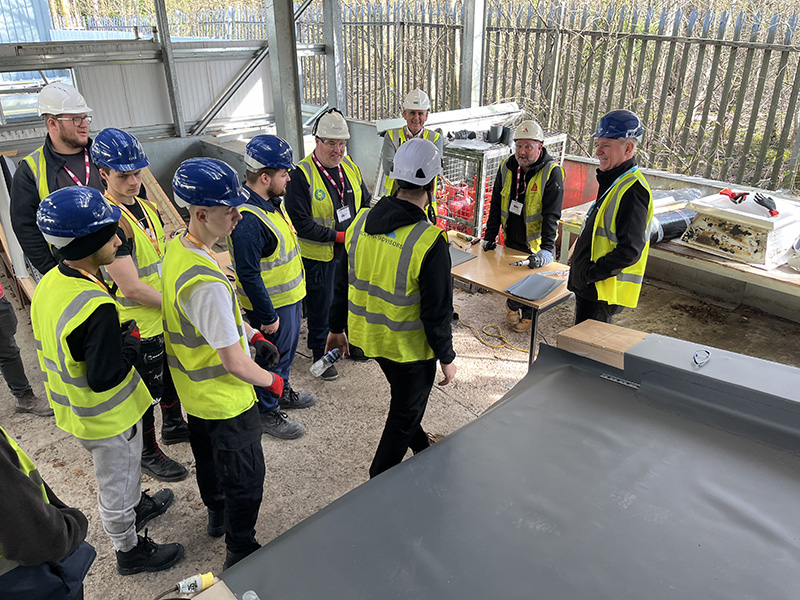
Nurturing talent and providing trusted and certified training is core to BriggsAmasco’s culture. In fact, its investment in employee development and training is based on a belief that career fulfilment benefits the individual, the company, and the continued drive for improved industry standards. BriggsAmasco supports NVQ Level 7 attainment for its employees – the equivalent of a Master’s Degree. This goes beyond CSCS card accreditation and helps employees upskill in areas other than roofing, such as quantity surveying, IEMA (environment and sustainability studies) and Inspector of Record (IOR). Human Resources CIPD qualifications also form part of BriggsAmasco’s personal development strategy.
The company also works closely with Developing the Young Workforce (DYW) North Lanarkshire, the Scottish Government’s strategy for strengthening links between education and businesses to better prepare children and young people for the world of work. The partnership enables BriggsAmasco to give back to local communities and inspire future workforces while raising its profile and providing development opportunities for existing employees.
Following the release of the Building Safety Act, BriggsAmasco also executed a company-wide competency review, redefining job roles, conducting more than 200 employee assessments and aligning personnel with targeted training programmes.
With the construction industry’s skills shortage unlikely to be resolved for the foreseeable future, the upskilling of those currently in the industry must take precedence.
Companies that focus on nurturing staff, such as BriggsAmasco, will take a prominent role, not only enabling the roofing sector’s talent to flourish but ensuring a brighter and safer future for the built environment.