

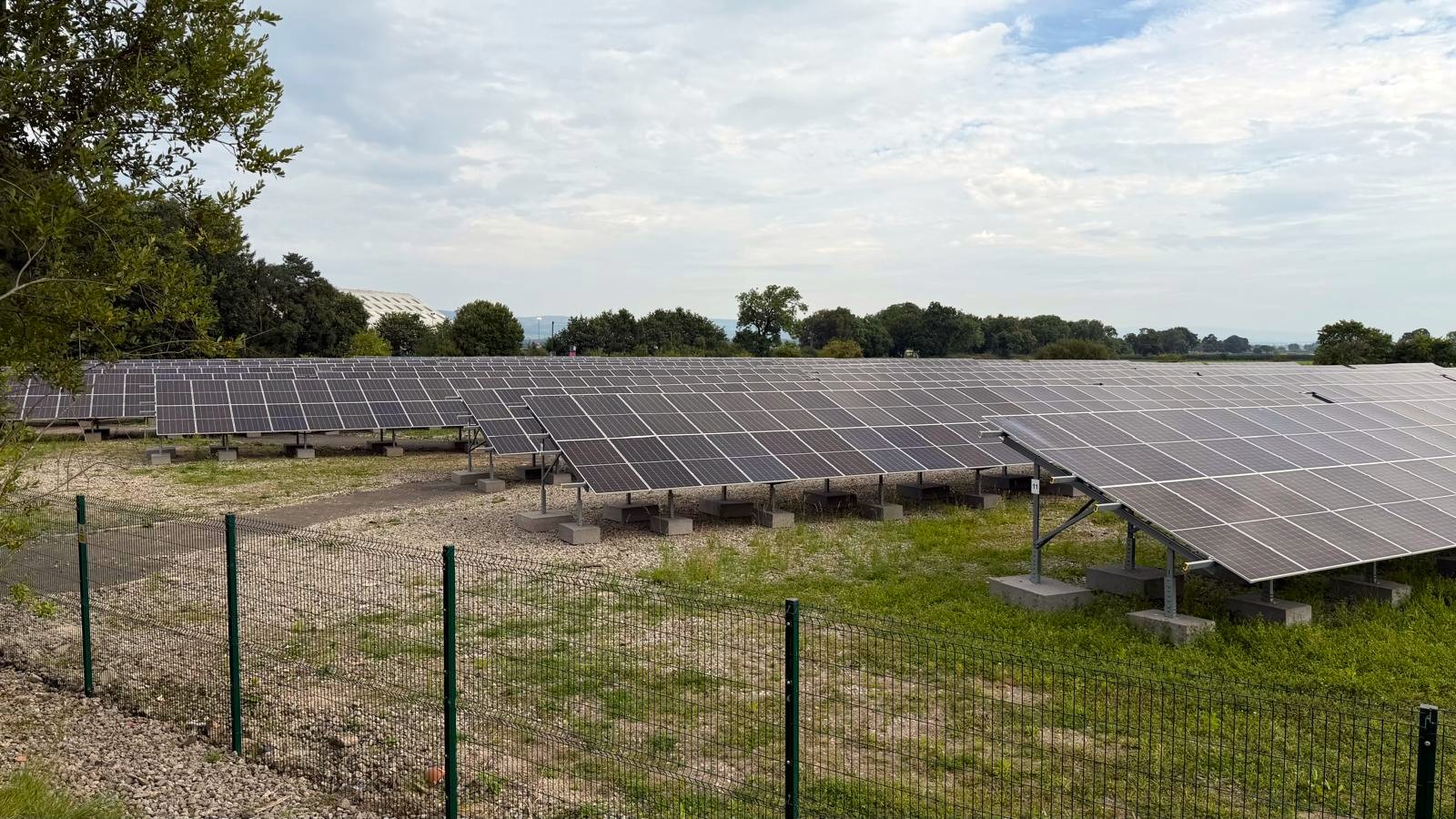
SCOTTISH Water has completed a solar power and battery storage project at Linwood Wastewater Pumping Station in Renfrewshire.
The scheme has seen nearly 2,000 ground-mounted solar panels installed at the site alongside 12 battery racks, helping to capture and store renewable power for use when needed most.
The solar panels are expected to generate up to 0.97GWh of green electricity each year, with around 53% of the energy generated used directly on site. The rest of the energy generated will be exported to the national grid for use.
The project, which is the third battery storage scheme to be installed on a Scottish Water site, has been led by the publicly owned utility’s commercial subsidiary Scottish Water Horizons and delivered by renewables specialist OCS.
New hedgerows and wildlife habitat features are also planned as part of biodiversity enhancements.
Scottish Water Horizons project manager Alan Mearns said, “This project demonstrates how we are using innovative technologies, including battery storage, to get the most from renewable energy generated on site. By capturing and storing energy to use at strategic times, we can improve resilience, significantly reduce operational costs and carbon emissions from this site and make our operations more efficient.”
Scottish Water operations team leader Jim Reid added, “Pumping stations operate around the clock to deliver essential services for local communities, so energy use is significant. The ability to store energy on site means we can use the renewable power generated in the most effective way and reduce our dependence on the grid, while continuing to provide a reliable service for customers.”
The project team has worked with a local school to help improve outdoor learning and sensory garden areas, installing new planters with sensory-friendly vegetation and creating a more engaging outdoor environment to support learning, wellbeing and connection with nature.
Ian Mailer, OCS divisional manager – support services, said, “This was a first-of-its-kind system for us, and it let us make the most of the site. The way we connected the solar panels and batteries meant we could fit in far more solar capacity than would normally be possible within the limits of the grid connection.
“Our teams delivered the installation through one of the toughest Scottish winters on record, staying on budget throughout. Alongside the build, we’ve valued the chance to support the local community, including working with the local school, and it’s been a genuinely collaborative project with Scottish Water Horizons from start to finish.”