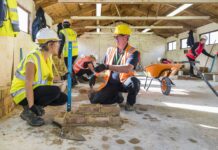


MAINMARK UK has completed work on a historic bridge in Stirling following subsidence affecting the made ground on its approaches.
The Telford Bridge is a circular arch road bridge designed in the early 19th century by renowned engineer Thomas Telford.
Stirling Council appointed the ground engineering and void specialist to strengthen the made ground on the approaches to the bridge, which had been impacted by subsidence. The retaining walls had also experienced settlement, which occurs when soil compresses beneath the weight of a structure.
The project is said to highlight the growing challenge facing Scotland’s ageing infrastructure, where ground movement, changing weather patterns and increasing traffic volumes are placing additional pressure on roads, bridges and other critical assets.
A number of homes in nearby Clackmannanshire were forced to be evacuated in May, following ground movement. Experts have warned that rising temperatures and changing ground conditions could intensify the risk of subsidence across the country’s built environment.
David Hedley, infrastructure lead at Mainmark UK, said, “Roads in Scotland saw nearly a 25 per cent increase in vehicle traffic between 2020 and 2025. Combined with rising temperatures and increasingly unpredictable weather, this creates a real and growing risk for infrastructure already vulnerable to ground movement.
“Subsidence is not simply a surface defect. It is often a sign that the ground beneath an asset has weakened or shifted. By addressing the ground conditions below or on the approach toinfrastructure, rather than repeatedly repairing damaged surfaces, asset owners can achieve a longer-term solution that reduces disruption, improves safety and protects critical transport networks.”
Mainmark’s work on the £40,000 project only took four days to complete and used targeted resin injection technology to strengthen subgrade soils and re-support the structure without the need for full reconstruction. The approach is designed to be delivered quickly and with minimal disruption, helping to reduce traffic delays while extending the service life of affected assets.
David added, “Infrastructure owners need to actively monitor for warning signs of substructural issues before they develop into major failures. Once bridges, roads or other assets become structurally compromised, the result can be long-term closures, significant repair costs and serious disruption for local communities and road users.
“Proactive ground improvement gives councils and infrastructure managers a way to intervene earlier, stabilise the asset and avoid more invasive reconstruction works.”