
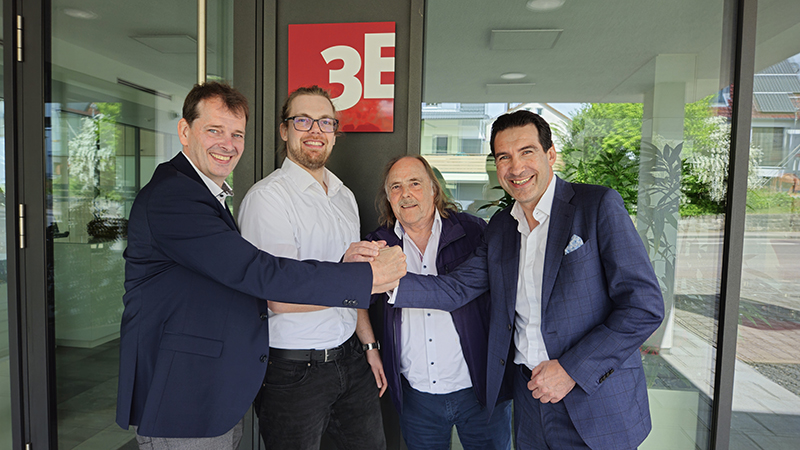
Forterro recently announced its intention to acquire 3E, a software provider for manufacturers of windows and doors. This was the latest in a series of acquisitions. Dean Hodges, UK sales director at Forterro, tells Project Scotland about the group’s strategy, industry trends, and growth in Scotland
Q) What are some of the latest innovations in doors and windows software?
A) A big trend at the moment is to connect the entire process much more closely, from design and quoting to manufacturing and installation, rather than businesses relying on multiple, separate systems.
We’re also seeing much deeper integration between fabrication software and the data of system houses or suppliers. This is particularly important for complex aluminium or PVC systems, and timber systems which need customising, as manufacturers need accurate configuration, pricing and compliance information very early in the process.
Another major area is machine connectivity. Modern software can now connect directly with CNC machines, saws, and other production equipment. This helps to automate workflows, improve tracking, and provide manufacturers with much better real-time visibility of the shop floor.
Interest in analytics and AI-assisted tools is also growing, particularly in relation to production planning, forecasting and workflow optimisation. Many companies are exploring ways in which these technologies can improve efficiency, reduce errors and address skills shortages. Although it is still an evolving area, businesses are beginning to recognise the value of better operational insight and decision-making support.
Cloud and mobile technologies also continue to play an important role. Teams increasingly expect to have access to live information wherever they are, whether that’s in the office, on the shop floor, or on site with customers. Platforms such as Quotila reflect the wider move towards more connected and accessible quoting and customer engagement tools.
Q) What benefits does this software provide to businesses operating in this sector?
A) The biggest benefit for manufacturers and fabricators is improved efficiency and visibility across the entire operation. When sales, design and production teams work from the same system and data, duplication is avoided, errors are minimised and the whole process runs more smoothly. In many cases, this integration extends directly to the shop floor, where connectivity with production equipment reduces the need for manual input and improves consistency.
Modern software is increasingly connecting the wider value chain, from system suppliers to manufacturers, dealers and installers. This enables all stakeholders to access shared, up-to-date data.
Automation is another key factor. Tasks such as creating quotations, processing orders and scheduling production can be completed more quickly and accurately. In practice, this means generating production-ready quotes in minutes using live pricing and product information, eliminating the need for Excel spreadsheets or manual data transfer.
Real-time visibility is also becoming increasingly important. Businesses want to know exactly where their orders are, how production is progressing, and where potential bottlenecks may arise, so they can respond quickly and maintain reliable delivery performance.
Many manufacturers are also facing ongoing labour and skills shortages, so reducing manual processes and increasing repeatability has become a priority. Meanwhile, software is helping companies to manage compliance, traceability and documentation more effectively as requirements around performance, safety and sustainability continue to evolve.
Q) How competitive is the market and how does Forterro stand out?
A) It’s a competitive market, but it’s also highly specialised. Software providers often have strong positions in specific materials, regions or parts of the production process. Fenestration manufacturing has its own specific complexities, and specialist software designed for these processes tends to deliver greater value than general-purpose ERP systems.
At the same time, manufacturers are facing growing demands in terms of product complexity, regulatory requirements, and the need to modernise their operations. This is driving demand for software that can support the entire lifecycle, from configuration and calculation through to production and installation.
Forterro’s position is shaped by the breadth and depth of specialist expertise it brings together. Through solutions such as Logikal, Klaes, BM Group products and 3E, the company has built up strong capabilities in aluminium, PVC and timber manufacturing. This gives Forterro broader coverage across materials and manufacturing environments than is typical in such a specialised market, while maintaining the required depth of functionality in each area. The BM Group acquisition is particularly significant in the UK and Ireland, given its longstanding presence, strong customer base and extensive industry connections.
Q) What was the driving force behind the recent acquisitions strategy?
A) The acquisitions of Orgadata, BM Group, Klaes and 3E are part of a clear, long-term strategy to develop a broader, more connected offering for the windows and doors industry. Together, these solutions cover the three main material segments as well as key regional markets, creating a more comprehensive and complementary portfolio.
Each business brings different strengths to the table, from materials, manufacturing processes, regional expertise or specific technologies. Logikal brings strong capabilities in aluminium-based configuration, Klaes strengthens our position in PVC and timber manufacturing, BM Group adds regional expertise in the UK and Ireland, and 3E contributes further depth in production planning and machine integration.
A notable aspect is continuity: the businesses retain their specialist expertise and close customer relationships, while benefiting from increased collaboration, shared investment and innovation across the wider Forterro group. Combining these businesses also enables Forterro to continue investing in areas such as cloud technology, machine integration and AI-assisted innovation, which are becoming increasingly important across manufacturing.
There is also a growing focus on improving connectivity between systems and workflows, enabling businesses to operate more seamlessly across design, production and customer-facing processes. While this approach naturally strengthens Forterro’s overall position in the market, the focus is on combining complementary expertise rather than forcing everything into a single standardised platform.
Q) Are you doing a lot of work in the Scottish market? Do you see scope to expand this?
A) The UK is a key market for the windows and doors sector, and Scotland plays an important role in this, especially given the strong focus on retrofitting and improving the energy efficiency of Scottish homes.
Forterro already supports a wide range of manufacturers across the UK, supported in particular by BM Group’s established presence in the region. In Scotland, demand is driven not only by new construction, but also by the need to upgrade existing buildings to meet current energy performance standards. This increases the need for accurate configuration, compliance, and production planning. At the same time, tightening regulatory requirements and the growing complexity of specifications are prompting further investment in advanced software solutions.
Looking ahead, there is clear scope for further growth. As manufacturers continue to invest in digitalisation and automation, the need for specialised software that reflects the realities of the industry will only increase.