

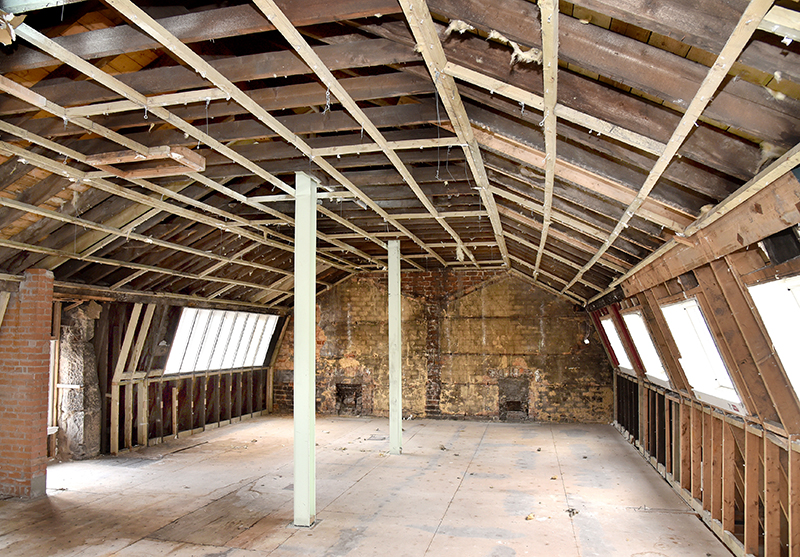
WEST of Scotland Housing Association (WSHA) hopes its landmark project to transform Glasgow’s B-Listed Station House at St Enoch Square into homes for mid-market rent could spark a nationwide trend of re-purposing empty city centre buildings into residential properties.
The initiative is tipped to be groundbreaking, with it boldly tackling the UK’s housing shortage by converting a centrally located commercial building into 28 modern, energy-efficient homes. Built in the late 19th century, the red sandstone building was originally the headquarters for the Glasgow and South Western Railway Company, before later serving as the HQ of the Glasgow District Subway Railway Company, and an information hub until its closure in 2008.
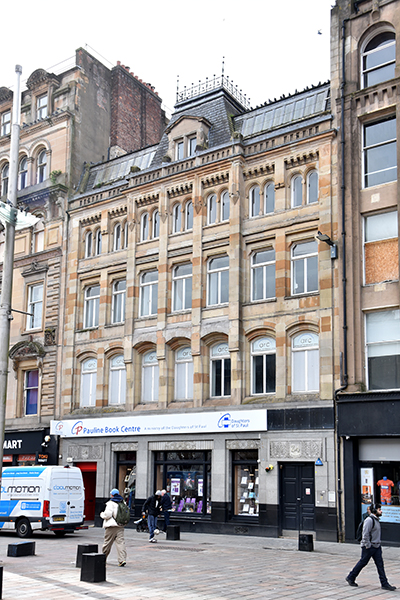
Providing Project Scotland with an exclusive tour of the stripped-out building, Simon Fitzpatrick, chief executive of WSHA, said he hopes that the homes ‘change lives’.
“It really lends itself to modern living,” he explained, showcasing the spacious, open-plan rooms featuring large windows overlooking the bustling St Enoch Shopping Centre and Square. “The size of the windows, the height of the ceilings, the floor space within the footprint of the building. We’ve planned one, two and three-bed flats, so this development will also be able to welcome families into the city centre.”
Hailing Glasgow City Council’s support for the project, the development is tipped to kickstart a trend of converting commercial buildings into residential properties. With an estimated 350-400 buildings currently lying empty in the city centre, such initiatives could help meet council ambitions to double the area’s population to 40,000 over the next nine years.
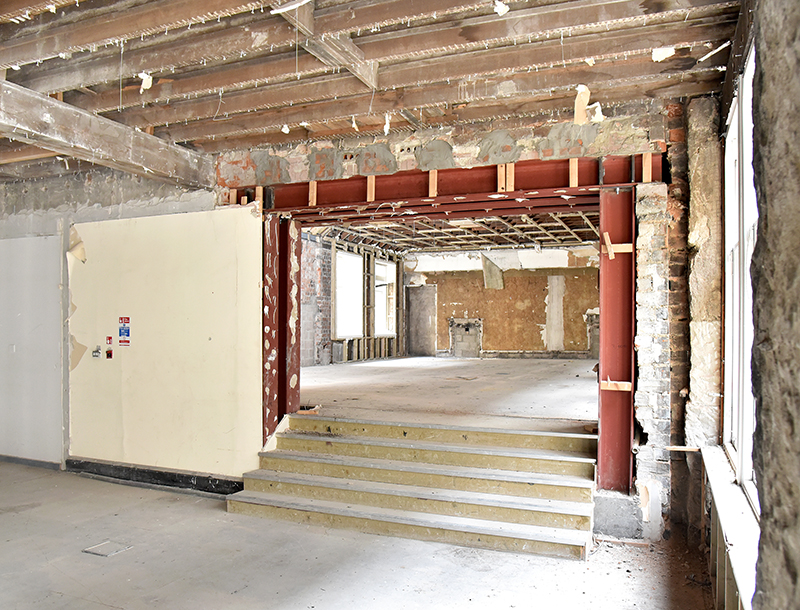
“It’s a privilege to be able to work in a historic building like this and not only retain the character but bring a new purpose to it, and a purpose that’s really relevant to 21st century living,” Simon added. “We know that city centres across Scotland are facing challenges with older buildings, so let’s bring them up to standard, maintain them, and ultimately deliver affordable homes that are critically needed.”
The association, which has over 2,100 properties in Glasgow, is no stranger to bold projects in the city, having delivered a number of Passivhaus schemes and recently launched an ambitious new development strategy aiming to deliver 1,000 affordable homes within the association’s areas of operation over the next ten years.
“West of Scotland Housing Association has a really proud history of pushing boundaries,” Simon continued. “I don’t think we’re bold for bold sake. What we are is bold with a view to making sure our homes are as energy efficient as possible, that they meet the aspirations of our current and future customers, they’re well-maintained, but also that they have a something a little bit extra about them as well.
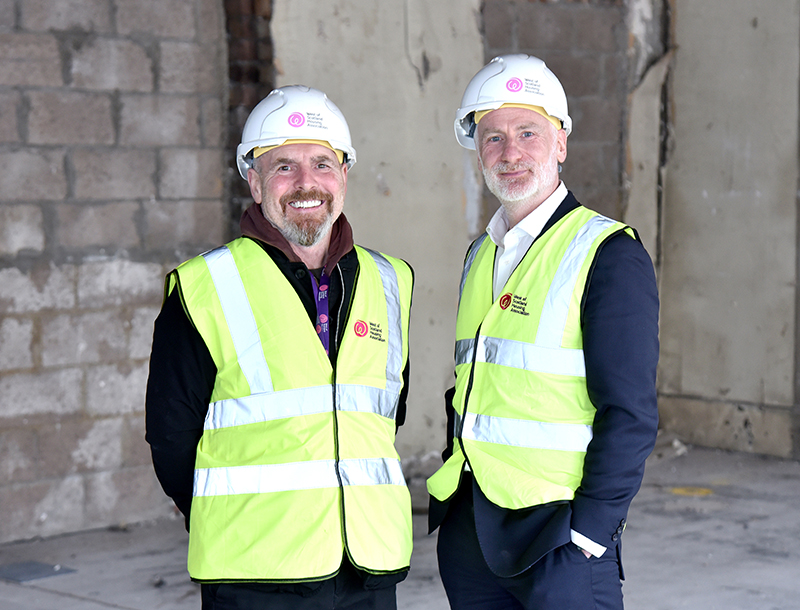
“So, it’s important that we’re bold, but it’s also important that we work within a framework of quality and affordability.”
With an estimated 175,000 empty city centre commercial units across the UK, WSHA hopes to spark a trend in Glasgow and beyond. Academics will track the economic impact to deliver tangible evidence on the benefits, which will be monitored from the start through to the long-term impact on aspects such as transport, retail, and health services.
“We’ll be doing the study right from the start of the construction phase to show the economic impact,” Simon said. The study will be in-depth to the point of tracking construction operatives’ spending at local sandwich shops during their breaks.
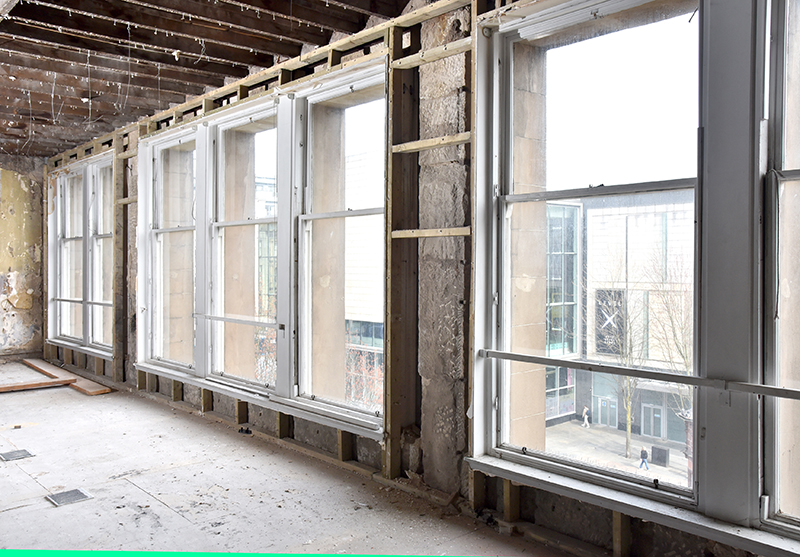
“We feel like this could be a real demonstrator; a pilot that shows bringing construction into the city centre really enhances the overall look, feel, and economic viability of the area.”
CCG (Scotland) Ltd has been contracted to lead the project. Having worked together for over a decade, Simon said it gives the association a ‘huge amount of confidence’ going into the venture.
“We’ve worked with a number of really great developers, but we’ve had a long-standing relationship with CCG,” he said. “CCG has built several of our developments – including the award-winning Passivhaus Dundashill development (in Port Dundas). We have real confidence in their workforce and quality, and real confidence they will deliver on time and on budget.”
Work will now turn to matters such as waste disposal and fire routes, which become more complex in city centre locations.
“We’re hoping to be on site this year,” Simon said. “I think it’ll be in the region of an 18-month to two-year project, so, it’ll not be quick because refurbishments and renovations never are – and we have to build risk into that – but fingers crossed within the next couple of years we will have people living in these fantastic homes and making a difference to the city.”