
Increased thermal, acoustic and fire performance required from soffit liners means ever increased insulation depths are being specified. But without careful consideration of how these deeper layers can be installed, performance goals may not be met, and cost and complexity could be added to the project, as Gary Robson, business development manager at EJOT UK explains here.
Being able to insulate the concrete soffits within cold spaces such as basements and underground car parks is becoming a significantly important consideration for developers. Using soffit lining insulation boards is a tried and tested way to help ensure the amount of useable space within the accommodation created above can be maximised, keeping the separating floor build up to a minimum.
Soffit liners fitted to the concrete ceiling or soffit of a cold space – underneath the separating floor – will add thermal resistance that limits heat transfer in a similar way to adding a layer of insulation under floor coverings. It will do the same for sound reduction too. The only difference is the position, meaning we are adding insulation to the cold side of the floor rather than the warm side. As a result, the greatest possible floor-to-ceiling height can be achieved within rooms.
Hence why soffit insulation can be extremely beneficial when planning new build, refurbishment and conversion projects, particularly where apartments or flats are being created. However, as the minimum performance levels set by the building regulations become ever more stringent, the demands placed on the soffit liner are increasing all the time, reflecting how they can make a significant contribution to maintaining the building’s ‘thermal envelope’.
Balancing increased thermal performance with fire resistance
The most recent updates to the building regulations, coupled with initiatives that set even higher thermal standards like Passivhaus and BREEAM, are key to Scotland and the UK meeting Net Zero Carbon (NZC) targets. And, as with all aspects of the building envelope, this has increased scrutiny on how well we insulate soffits.
The response has naturally been to look at upgrading the thermal performance offered by soffit liners and specifying those with lower U-values. And while this may not result in a particularly significant increase in the thickness of phenolic soffit liners, it is very different for mineral wool products – and that has implications for the fixings.
Despite their greater thickness, mineral wool insulation is favoured by many architects and developers due to its higher non-combustibility classification. Soffit liners manufactured in this material offer Euroclass A1 and A2 reaction to fire ratings, reflecting their higher level of fire resistance versus the B classification of phenolic products. This does not mean that phenolic soffit liners should not be used by any means. It reflects the fact that mineral wool is not only preferable in many projects because it offers an additional layer of fire performance, but also due to it being stipulated in higher risk buildings.
Overcoming installation challenges
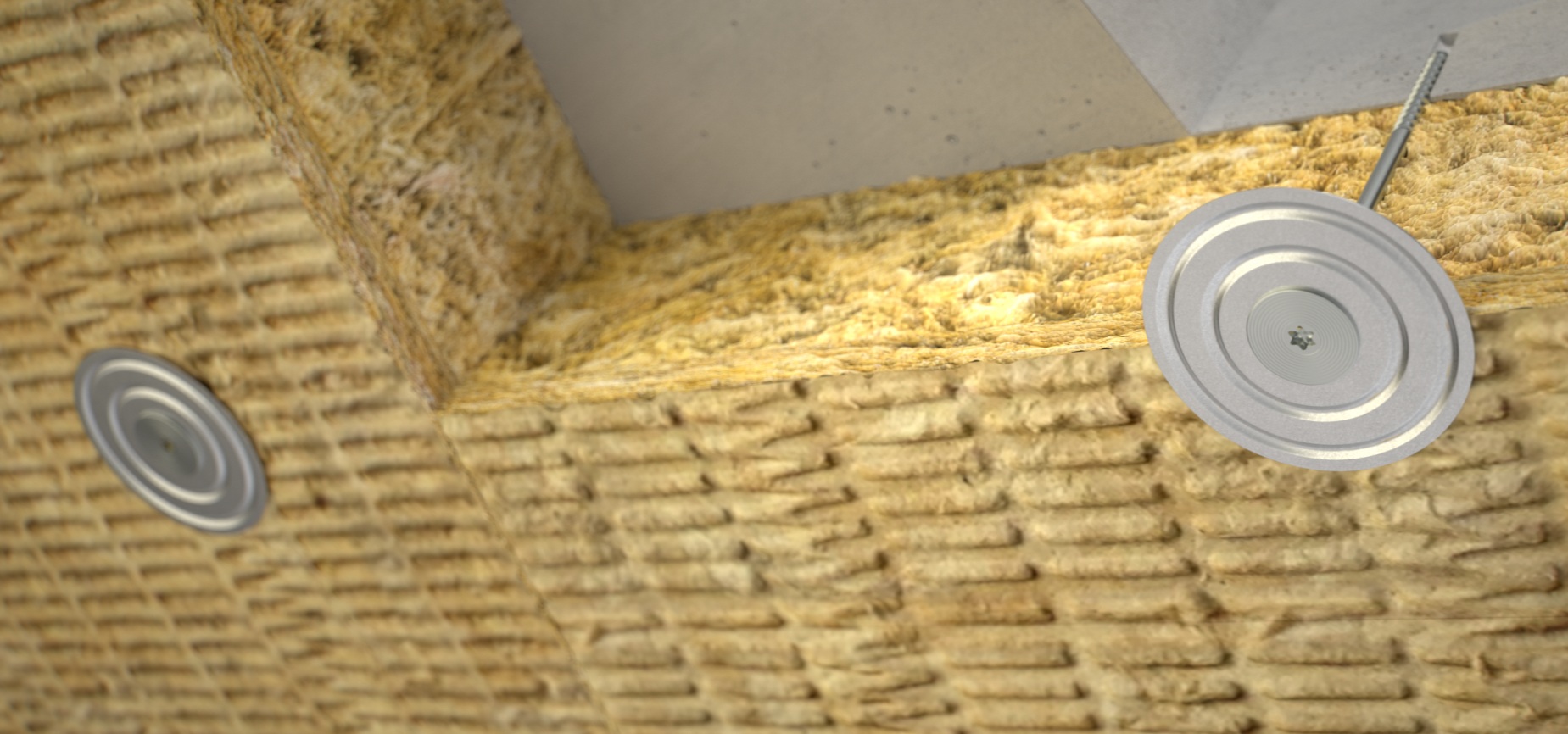
Deeper mineral wool insulation means longer fixings are required to attach the soffit liner slabs to the substrate, which must also accommodate its increased weight.
All soffit insulation manufacturers will provide guidance on choosing the correct fixings for their products, including a fixings plan with minimum edge distances specified.
But if you are involved in a project which requires thicker levels of insulation than you have used on previous soffit projects, it is important to take time to assess the fixing methods available early to ensure productivity on-site is not compromised and that the quantity of fixings used is minimised.
The good news is that fixings have evolved in line with the trend for deeper mineral wool soffit liners to offer an engineered solution that does not require any special installation tools or methods. In fact, with EJOT’s DDS-Z based solution, they do not even require a deeper embedment into the concrete or masonry substrate to which the soffit liner is being installed.
Hassle-free installation with minimal fixings
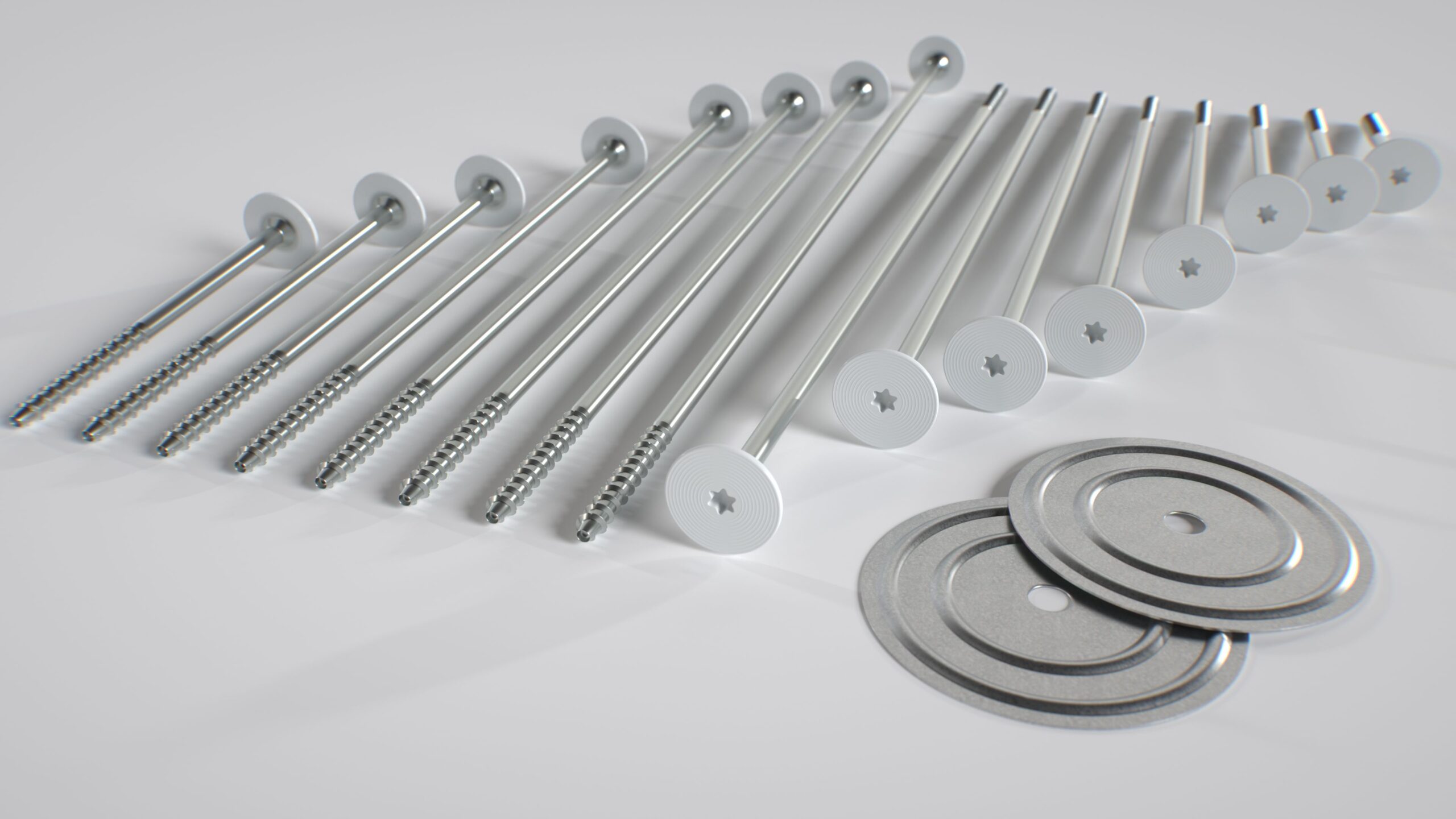
EJOT’s combination of the DDS-Z premium quality concrete screw with the EJOT DD-T washer is purpose-designed for this application. The steel screw features a duplex coating and self-tapping thread for use in cracked and non-cracked concrete, and it has a C1-C3 corrosion resistance classification.
Originally developed as an EWI anchor, the DDS-Z is by no means a new product, but what is new and already attracting strong market interest are the even longer fastener lengths. Lengths including 275, 300, 325 and 350mm have been available for several years, allowing the installation of soffit depths up to 325mm, but as original manufacturer of this application specific solution, EJOT has now responded to the market drivers by developing a 400mm screw.
Importantly, despite these much extended fastener lengths, all versions still only require a 25mm embedment into the concrete. This reduces the potential for impacting on reinforcement within the concrete – an issue which could add time, complexity and cost to the project. And because the screw does not expand, it is more favourable for use with pre-stressed concrete beams.