
A Blantyre-based electric heating specialist says electric boilers must form part of the solution to the UK’s decarbonisation ambitions.
The Electric Heating Company (EHC) was founded 21 years ago by a number of local businessmen, some of whom remain involved with the company to this day. EHC is a prominent supplier of products including electric boilers, radiators, and air source heat pumps.
The firm has grown to become a major success story for Lanarkshire, extolling the virtues of electric heating during a period where global gas markets remain volatile and governments are under increasing pressure to reduce carbon emissions.
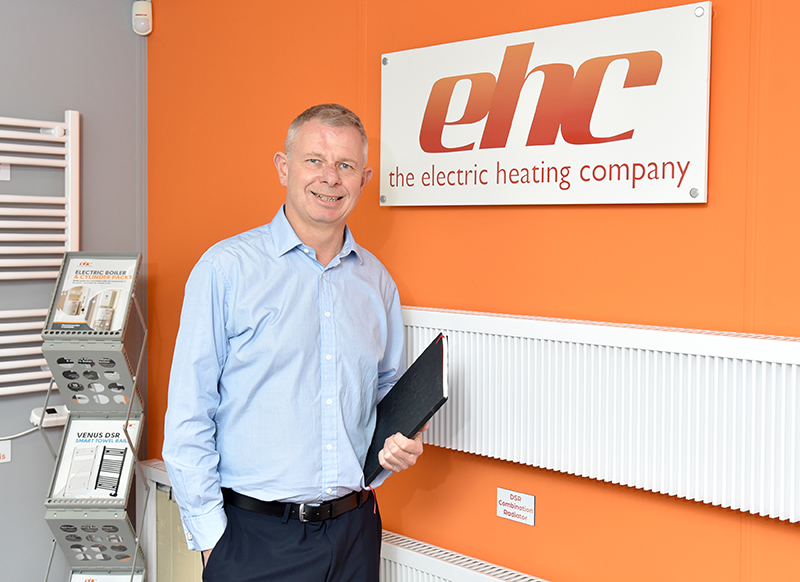
EHC chief executive David Barrett told Project Scotland that the challenge of educating people on the benefits of electric heating is as relevant today as it was in 2005.
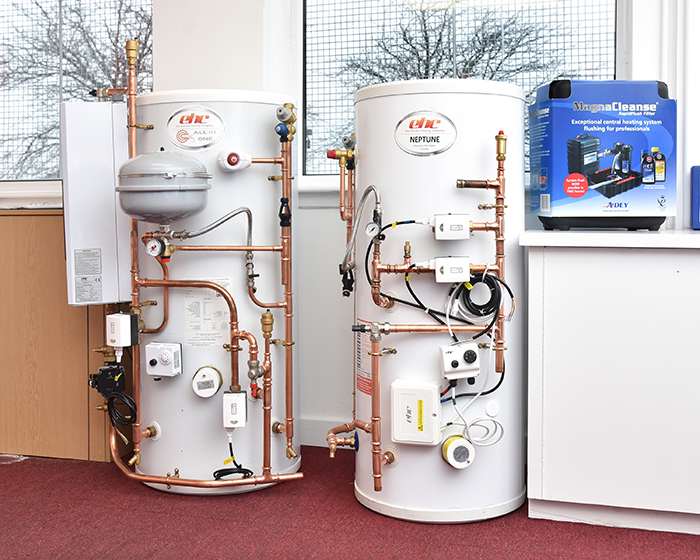
“Electric boilers are not a new technology but, 21 years ago, EHC was one of the first companies in the market selling them,” David explained. “An electric boiler, inherently, is a simpler appliance than a gas boiler. There are fewer moving parts, which has a number of benefits because the reliability’s better; there’s less to go wrong. There’s no flue; a big issue with gas boilers in flats (and other high-rise buildings) is you have to find somewhere to take the flue.
“From the start it was about explaining the benefits of electric boilers to homeowners, specifiers, and installers. And that’s as relevant 21 years later as it was then. Now there are more installers and homeowners who have heard of electric boilers, but the market size is still small compared to the gas boiler market. UK market size for electric boilers is about 22,000 units. Last year, 1.35 million gas boilers were still sold.
“The government wants to decarbonise heating but it’s proving a challenge, and it has reigned back from an end date for gas boilers.”
David highlighted the fact that both the UK and Scottish governments have been heavily focused on air source heat pumps as a replacement solution. While EHC sells these products and believes they should form part of the sustainability solution, the firm would like to see more incentives for electric boilers.
“In the right property, air source heat pumps work great, for example in a new-build or very well insulated property that has been designed for an air source heat pump from the start,” David explained. “What we hear from both homeowners and local authority housing associations is when you’re having to retrofit an air source heat pump into a property, the cost is high, you’ve got to generally re-pipe, and you need bigger radiators because the system works at a different heat.
“That means the cost becomes prohibitive.
“Our view is that air source heat pumps need to be one part of the product solution, but more support for electric boilers and more awareness of dry heating systems with electric radiators, needs to be part of the solution too, to tackle that figure of 1.35 million gas boilers.”
One of the biggest challenges in persuading people to switch to electric is the perception that it is much more expensive. David revealed that the UK has the most expensive electricity per unit per kilowatt-hour in the world, which makes running costs an issue. However, he argues there are other factors which should be taken into consideration.
“All electric boilers operate at 100% efficiency for the duration of their life,” he said. “An electric boiler and electric radiators can last for 20 years. We’ve still got products going that we sold in year one. A gas boiler over time loses efficiency and will generally last 10-12 years.
“It’s helping consumers understand that the controllability of electric radiators is really key. It’s much easier with electric radiators to be heating the room that you’re in rather than the whole house.
“It’s not about the unit cost; it’s about the efficiency of the product and the usability. That’s what we’re working to get across to customers.”
Another issue concerns market volatility. The recent military operation in Iran has seen a surge in wholesale gas prices, mirroring the impact seen at the start of the Russia-Ukraine war. While the cost of wholesale electricity has also increased, the rise has been proportionally much lower. Therefore, David claims consumers who opt for electric heating and hot water are protecting themselves against significant volatility and geopolitical tensions – especially now when the buffer between supply and demand is tight.
He likens the switch to electric boilers to drivers moving from petrol to electric cars, in that while people are becoming more aware of carbon emissions and realise that decarbonising is the ‘right thing to do’, it can be a big step for most to make.
To help with the transition, EHC’s product range has evolved over the years. Recent products have smart controls and features and some can integrate with solar PV, while crucially the size of a number of electric boilers has also reduced, making them suitable to be installed in tight spaces.
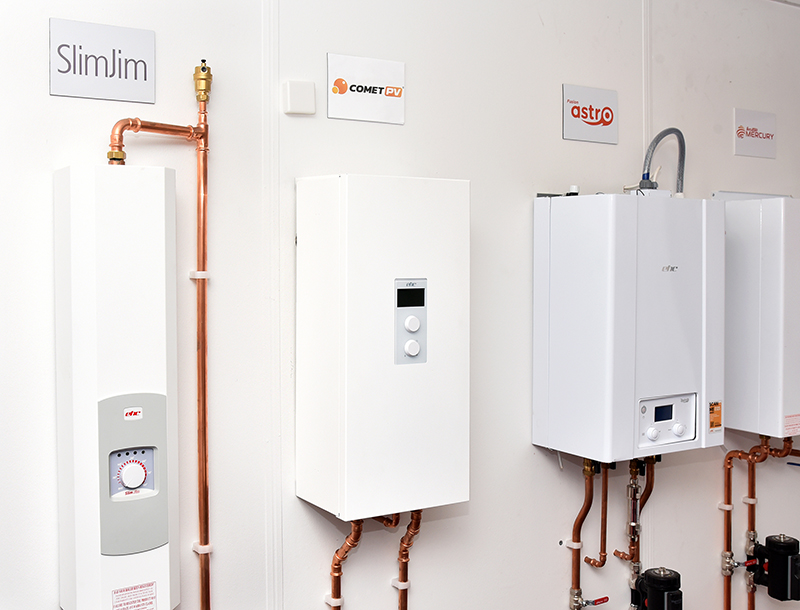
“The Comet PV electric boiler we launched two years ago is smaller than some of the other products and also lighter,” David explained. “It’s a one-man lift. The SlimJim boiler is very compact. The Comet PV, as the name suggests, can work with solar PV. This is about using the electricity generated from the roof to do your home heating and hot water. It’s a real option now for consumers to have an all-electric home.”
As the market continues to move away from mainly gas products, David believes there’s a huge opportunity for the electric heating market to grow. In the last year or so, the company has delved more into the commercial space.
“These are larger boilers,” David added. “Commercial landlords, offices, schools, and warehouses have the same challenge around wanting to decarbonise as residential customers. We’re adding products that have different outputs. We’ve already got the widest selection of electric boilers in the UK market. This is about having the right tailored solution for residential customers and now for commercial customers as well.”
EHC also works with local authorities and housing associations. The business has a strong relationship with Fife Council, for example, and has supplied DSR heat retention radiators to the local authority for the past 14 years.
The company plans to continue growing. EHC currently has 16 employees and holds a significant stockholding in its warehouse, meaning the majority of orders can reach customers the next day.
The business is also working with a number of local colleges around training on electric boilers, bringing new people into the industry. EHC has facilities to carry out installer training in-house and also provides toolbox training at customers’ premises.
To help develop the next generation of electric heating engineers, EHC has also commenced a relationship with the Edinburgh Boiler Company and Energy Training Academy, which saw the firm sponsor a recent apprentice.
Not surprisingly given the trend for more sustainable products, the market is becoming more competitive. To help give it the edge, all EHC products are made in Europe, to the company’s specification, and with the EHC name on them.
“We are very focused on the right pre-sales support to make sure that we’re recommending the right product,” David added. “We’ve then got strong post-sale support to installers and homeowners as well. We’re proud of our 4.8 rating (out of 5) on Trustpilot, which is based on over 1,000 reviews. That’s what we’re focused on – the right advice, good quality products, with good support. We’re building confidence that electric heating is a viable alternative to gas.”