
Michael Fink, CEO of Mask Logic, discusses the vital importance of respiratory protection
WHEN PPE fit fails, protection fails. For too long, protective equipment in the workplace has been designed with only one type of worker in mind. Yet in respiratory protection, ‘almost fits’ is never good enough.
When employers discuss safety in high-risk environments, the focus usually falls on rules, training, and compliance. But one of the most important factors is also one of the simplest: whether the protective equipment issued to workers actually fits properly.
Inclusivity starts with proper fit
Fit is equally essential to both protection and comfort – and that should never depend on gender, ethnicity, or physical characteristics.
An issue finally being discussed is that women and under-represented workers are more likely to experience poor fit, discomfort, and inconsistent sealing from standard off-the-shelf masks and respirators. This is because respiratory protection has historically been designed around what the ‘average’ worker looks like – often based on male facial dimensions and limited sizing models that don’t reflect today’s workforce.
Across sectors like construction, manufacturing, energy, and industrial processing, the workforce has changed with more women moving into these roles where exposure to dust, fumes, and hazardous particles is a daily reality. Workplaces are now more diverse in ethnicity, age, and physical characteristics. Respiratory protection, however, has been slow to catch up.
Fit, comfort, and compliance – the real-world impact
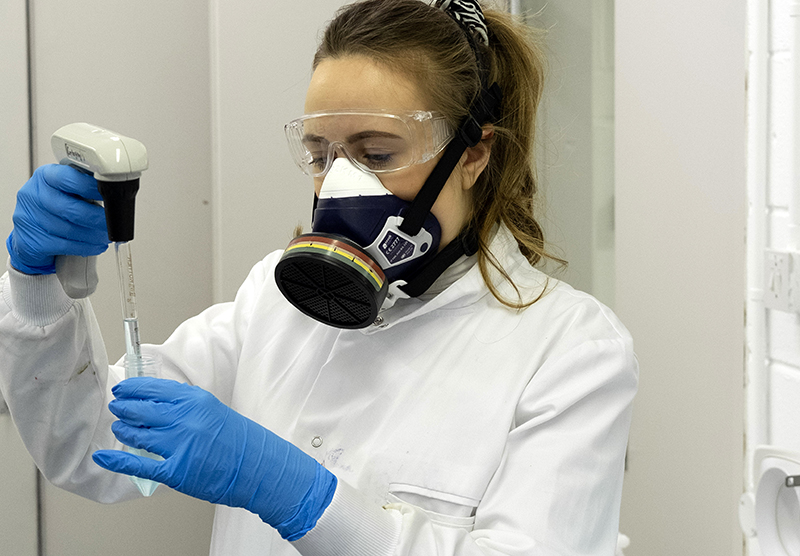
A correctly fitting mask depends on a seal. If a respirator gaps around the cheeks, nose, or chin, contaminated air can leak in and bypass the filter. Even small leaks can undermine the protection the product is supposed to provide.
The problem isn’t only technical. It’s behavioural too. Discomfort is one of the biggest drivers of inconsistent PPE use. When a respirator pinches, rubs, or requires over-tightening to keep it in place, people naturally try to relieve that pressure. Over time, discomfort can turn a piece of life-saving equipment into something people tolerate rather than trust.
Fit testing is often held up as the answer, and it plays a critical role. But fit testing can only identify the problem – it can’t fix the limitations of what’s available in a particular workplace. The issue is the industry’s lack of inclusive design, and lack of attention regarding achieving a comfortable fit, which can significantly impact how valued employees feel at work.
Encouragingly, there are signs that awareness is shifting. The British Standards Institution recently launched BS 30417:2025 – guidance urging employers and suppliers to provide inclusive PPE that fits a diverse workforce – regardless of gender, ethnicity, body shape, age or disability. It reframes inclusive PPE as a practical requirement rather than a nice to have.
It also points towards designing for real people, not averages.
Innovation and the path forward: fit for all faces
At Mask Logic, the work to solve this issue began during the Covid-19 pandemic, when the problems of uncomfortable, ill-fitting respiratory protection became impossible to ignore – especially across healthcare settings where high-grade masks were worn for extended periods.
The conclusion was simple: if fit is fundamental to protection, the fit should be personal.
Our team includes engineers, scientists, and healthcare experts who had seen first-hand the impact of poorly fitting PPE. Mask Logic has embraced the possibilities offered by modern technology. By using 3D scanning to capture the contours of an individual’s face, and 3D printing to create a personalised interface, it has become possible for us to design respiratory protection around the person – rather than expecting someone to adapt to the product.
The goal isn’t novelty. It’s consistent sealing, reduced pressure points, and respiratory protection that people can wear comfortably and properly for the full duration it’s required.
Of course, improved design only matters if it meets established safety standards. Independent certification is a key part of ensuring that new approaches deliver genuine protection – not just good intentions. That’s why milestones like CE certification are important to Mask Logic and the industry: it provides a recognised marker that performance and compliance have been properly validated.
Ultimately, the issue is bigger than comfort, and bigger than convenience. Ill-fitting respiratory protection disproportionately affects women and under-represented workers. If workplaces are serious about protecting every employee, then respiratory PPE must fit for everyone who wears it.
It bears repeating: fit is not an optional extra when it comes to PPE – it is the foundation of protection and comfort.