

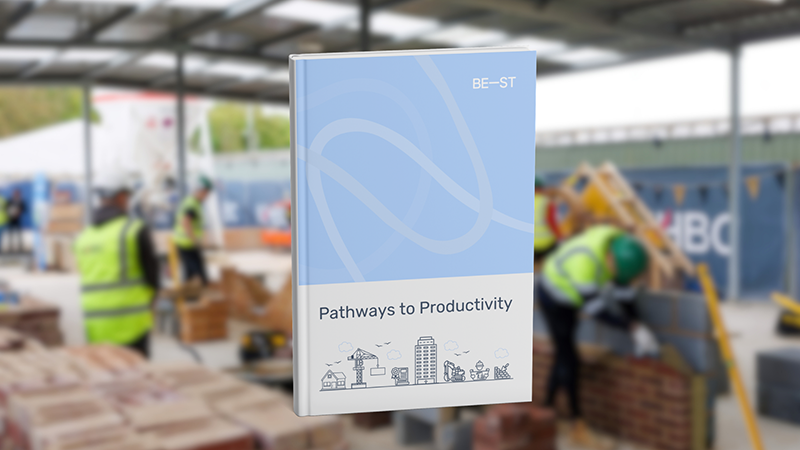
A new report has explored how Scotland can strengthen the flow of new entrants into the construction and built environment workforce.
Pathways to Productivity, commissioned by Skills Development Scotland on behalf of the Skills and Workforce Group of the Construction Accord and delivered by BE-ST, examines how the industry can attract, recruit, develop, train, and retain a new generation of skilled workers.
The research draws on engagement with employers, representative bodies, education and training providers, and public sector partners. It provides insight into how the current system supporting workforce entry operates and identifies how to strengthen and scale these pathways in the years ahead.
Forecasts suggest the construction workforce could grow to around 214,500 by 2029. However, with the CITB estimating that around 8% of the workforce must be replaced each year due to natural attrition, continued focus on attracting and developing new entrants will remain essential.
At the same time, the sector is evolving, with increasing demand for skills linked to digitalisation, modern methods of construction, and new performance standards. This creates an opportunity to design pathways that increase participation in the sector but also support the development of the competencies required for a modern built environment.
The report highlights the importance of strengthening collaboration across the construction skills ecosystem including employers, training providers, representative bodies, and public partners. It identifies six shared measures of success that stakeholders see as central to strengthening the flow of new entrants: workforce capacity, competence, employer confidence, sector culture, workforce composition, and long-term continuity in workforce planning.
The findings form part of wider work under the Construction Leadership Forum’s Skills and Workforce Mission to support workforce development and strengthen the long-term resilience of Scotland’s construction industry.
Douglas Morrison, deputy CEO at BE-ST, said, “Scotland’s construction sector faces long term challenges in both workforce capacity and capability, set against rapidly evolving client and industry requirements. Through engagement with stakeholders across the system, there is clear motivation to increase the flow of new entrants and strengthen lifelong learning.
“However, while there is broad agreement on the challenges, perspectives on solutions vary significantly. This report does not seek to prescribe a single answer but instead sets out a range of practical levers to transform and optimise how we recruit, develop and sustain the workforce for the future. We intend for it to inform longer term discussions on evolving our approach and to encourage active engagement from all those involved across the system.”
Elaine Ellis, skills planning manager (construction and net zero) at Skills Development Scotland, added, “Workforce and skill shortages persist across many key roles in construction, yet individuals wishing to train for these positions encounter significant barriers to entry and often struggle to secure the new entrant roles necessary for developing competence.
“This research explores some of the reasons behind this paradox. Its aim is to act as a catalyst for change and to set out some of the barriers that need to be addressed. Supporting people to enter the sector — and, crucially, ensuring they can develop the skills required for the future — is not only a win for those aspiring to join a sector rich with opportunity, but also a win for the sector itself and our wider built environment.”
The Executive Summary for Pathways to Productivity is available to read now: https://static1.squarespace.com/static/675717626cb4fc2079ea8b55/t/69bbe0b6032ee31bf2bb723d/1773920440718/Pathways+to+Productivity+-+Executive+Summary_compressed.pdf