

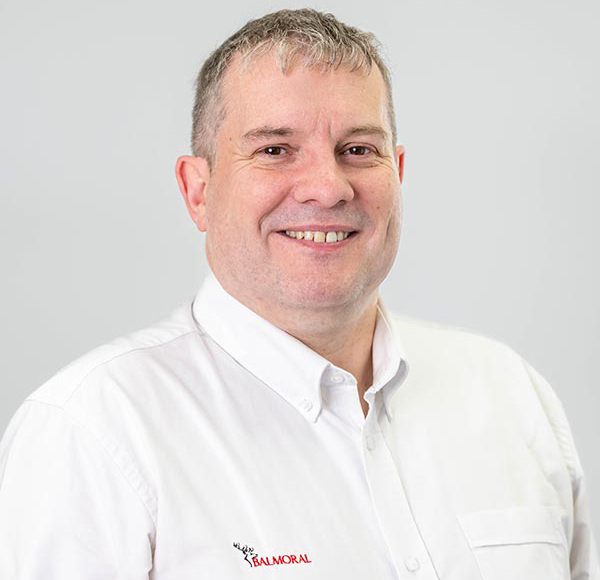
Fraser Milne, engineering and projects director at Balmoral Comtec, discusses offshore wind and the value of a resilient Scottish supply chain
SCOTLAND’S offshore wind ambitions are significant, and rightly so. With one of the largest development pipelines in the world, the country has the natural resources, engineering heritage and industrial capability to play a leading role in the global energy transition.
Scotland now has an offshore wind project pipeline of around 40–41 GW, including one of the largest single leasing rounds globally through ScotWind. Turning that ambition into delivered projects, however, depends on getting the conditions right today, particularly for the supply chain that underpins every offshore development.
Much of the public conversation around offshore wind understandably focuses on developers, policy frameworks and national targets. Yet delivery ultimately relies on the network of engineering, manufacturing and subsea specialists that design, build and install the infrastructure offshore. From a supply chain perspective, the opportunity in Scotland is real, but maintaining momentum will depend on greater visibility, coordination and long-term thinking. Alongside policy reform, public investment is already being directed towards this challenge, with up to £500 million committed over five years to strengthen offshore wind infrastructure and supply chain capability, with the aim of unlocking an estimated £1.5 billion of private investment.
Creating confidence through visibility
Across the sector, uncertainty around timing remains one of the most persistent challenges. Developers, suppliers and contractors are all investing time and capital to prepare for future projects, but without clear sight of when those projects will progress, planning becomes difficult. For manufacturers and subsea suppliers, scaling capacity is not something that can be switched on at short notice. Investment in facilities, equipment and skilled people must happen well in advance.
Importantly, much of the Scottish subsea supply chain already has the capability and capacity to support near and medium-term offshore wind demand. In many cases, suppliers are ready to deliver today, drawing on established facilities, experienced teams and proven technologies. What is needed now is the confidence to move from readiness to commitment.
However, without clearer visibility on project timelines and delivery certainty, suppliers are constrained in making the further investment decisions required to scale at pace. When visibility improves, confidence follows, and with it the ability to scale efficiently and cost-effectively.
Applying lessons from Scotland’s energy heritage
Scotland’s wider energy heritage also offers valuable lessons for offshore wind. In oil and gas, the industry learned the importance of integration, long-term planning and whole-life thinking, sometimes later than ideal. Decommissioning in particular has highlighted the consequences of designing assets without sufficient consideration for end-of-life requirements.
In mature offshore sectors, decommissioning can account for a significant share of total lifecycle expenditure, underlining why early design decisions have long-term economic and environmental implications.
Offshore wind now has the opportunity to embed those lessons from the outset. Designing infrastructure that considers installation, operation, maintenance and eventual removal from day one supports better environmental outcomes and more sustainable project economics. It also reduces future risk and cost. Thinking beyond initial installation is not about slowing progress, but about ensuring today’s solutions remain fit for purpose over decades of operation.
There is also an opportunity to take a more joined-up approach across projects. Too often, different elements of offshore wind developments are progressed in isolation, with limited coordination between disciplines. Subsea infrastructure, cables, foundations and installation methodologies are closely linked, yet they are not always considered together during early design stages.
Greater collaboration across the supply chain can unlock efficiencies, reduce offshore time and improve overall project outcomes. When suppliers are engaged early and encouraged to work together, there are opportunities to simplify installation, reduce vessel time and optimise designs. At scale, these efficiencies can have a meaningful impact on cost, capacity and delivery schedules.
Strengthening the supply chain story
Scotland’s offshore wind supply chain also has a positive story to tell. From skilled engineering roles and manufacturing jobs to long-term investment in facilities and research, suppliers contribute directly to economic resilience and regional growth. Some studies estimate that ScotWind projects alone could support several thousand long-term jobs in Scotland over their lifetime, reinforcing the importance of building domestic capability rather than relying solely on overseas supply. These benefits are real, but they are not always well understood outside the industry.
Clear, transparent communication around the role of the supply chain can help build confidence, both within the sector and with the wider public. Demonstrating how offshore wind supports jobs, skills and industrial capability strengthens the case for continued investment and reinforces Scotland’s position as a credible delivery partner on the global stage.
Offshore wind is moving at pace, and the scale of ambition is encouraging, and Scotland has the foundations in place to deliver its offshore wind ambitions. With a 40+ GW offshore wind pipeline, a strong subsea heritage and substantial investment already earmarked for infrastructure and skills, the building blocks for a resilient domestic supply chain are already emerging. By providing clearer visibility, encouraging collaboration and applying the lessons learned from past energy transitions, the industry can create the conditions needed for long-term success.
Planning today is what will ensure offshore wind delivers not just in the next few years, but for generations to come.