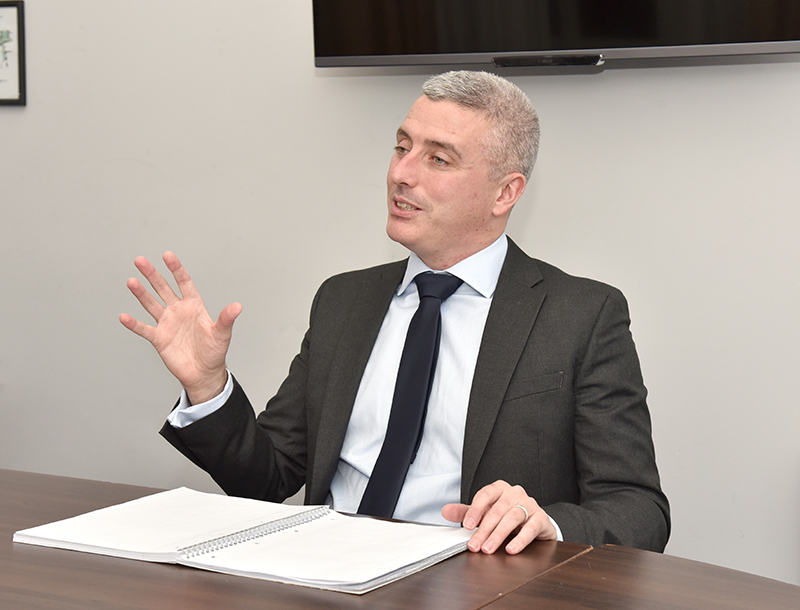
APPRENTICESHIP affordability and planning delays have been cited by newly promoted Scottish Building Federation (SBF) MD Paul Mitchell as the two largest areas of focus for the association this year.
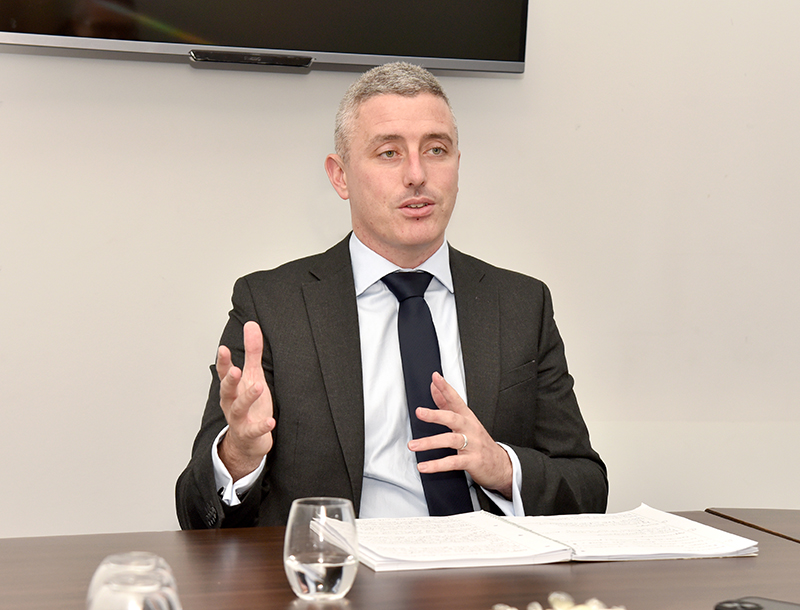
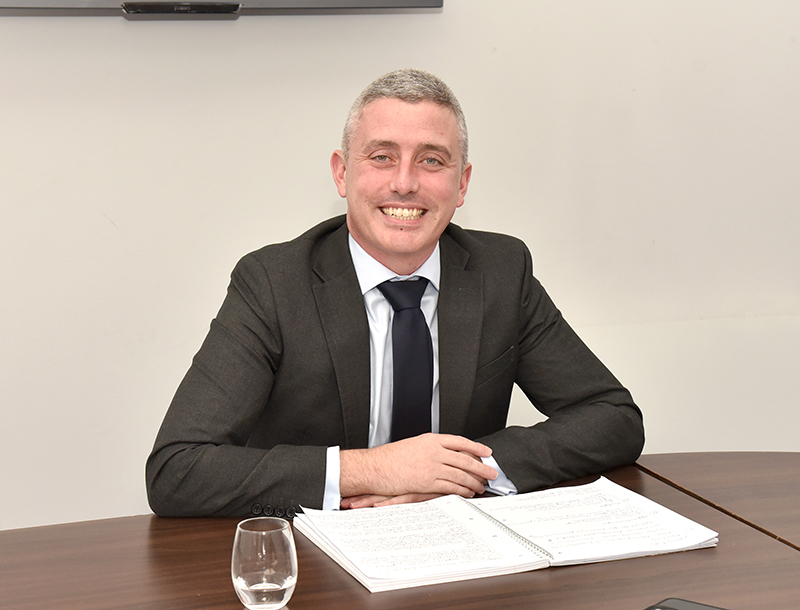
In an exclusive interview with Project Scotland, Paul, who recently stepped up from his previous role as operations director, revealed the SBF is on a mission to address some of the major issues currently facing construction firms of all sizes across the country. The growing impact of AI, the building safety levy, and attracting more youngsters into the sector are among the other challenges the SBF is seeking to help members navigate in the coming months and years.
Paul was appointed MD of the Scottish Building Federation in December. He initially joined the association – which marked its 130th anniversary last year – in 2010 as an HR advisor. He rose to become head of employment affairs for a decade before becoming operations director in March 2024 when previous MD Vaughan Hart stepped down.
“For somebody who’s been at the federation for 16 years, it was a real honour to be appointed as managing director,” Paul said. “It was a surprise; it wasn’t something that had been discussed directly with me. It was a bit of a shock but a pleasant surprise just before Christmas.”
One of the key areas he’s hoping to influence concerns apprenticeships. The National Minimum Wage (NMW) for apprentices is rising to £8 per hour this year, marking a 105% increase since pre-Covid time. Paul explained these rises are having a major impact on affordability.
“It’s really expensive now to take on an apprentice,” he stated. “The flip side of that is the CITB grant that employers get for recruiting an apprentice hasn’t increased since 2019. It’s still at £14,500 in total. We are looking to try and get that increased, but we realise CITB have their own challenges and there’s not an infinite pot of money for them to be able to draw from.
“Another element of this is something we’ve been working on for over a decade. That is the apprenticeship qualification itself. The craft apprenticeships have portfolios of evidence in them now, against our advice, and some candidates really struggle to get the full range of evidence required to be able to complete their portfolio. We’re working with CITB, SDS, SQA and others to try and get changes to the qualification so that it’s more achievable.”
Paul said the combination of the rising NMW, no increase in grant funding, and the qualification issue has created a ‘perfect storm’ when it comes to recruiting apprentices.
“Unfortunately, in some areas of the country, we’re beginning to see that play through in terms of recruitment figures for apprentices and some real worries about the sustainability of local college courses because recruitment is beginning to fall,” he added.
The second major issue Paul is keen to address relates to planning delays, particularly around housing. He cited stats including that the average decision time for major developments (50 or more units) is currently 37 weeks (against a statutory timeframe of 16 weeks), while for smaller developments, decisions are taking five months (more than double the two-month target).
“Those delays are making a lot of speculative housing developments really challenging and unaffordable,” Paul revealed. “There has been some improvement recently and I think we need to recognise that. The appointment of Mairi McAllan as cabinet secretary for housing is a step in the right direction, and they’ve developed a planning hub to try to tackle some of the sites with the biggest delays. That is beginning to make an improvement, but the delays are still excessive.”
Paul’s promotion to MD comes at a pivotal time, with the Scottish Parliament election scheduled for May. He described this year’s poll as being particularly important, not least because of the huge number of new MSPs who look set to be sworn in, creating a potential opening for industry bodies to influence a new generation of politicians.
Paul revealed the SBF will be engaged in dialogue with candidates from across the political spectrum over the coming months and listening with interest to hear what they have to say on the topics of apprenticeships and planning.
“The per candidate funding for an apprentice through SDS has been stuck at around £8,700 for a number of years,” Paul said. “We’d like to see an increase in that so that college courses are more affordable.
“We’d also like to see a continued focus on planning and increasing the resources that are available to local councils for planning operations, to try and get those delays reduced.
“The third aspect which is on the table just now is the building safety levy, which has just passed through the first stage of parliament. That’s going to be introduced in the coming years and there is still discussion to be had about reliefs and rates. We would like to see exemptions extended wherever possible, particularly for remote rural and Island communities, for SME developers, for social and affordable housing, and we’d also like to see the rate set as low as possible before it’s implemented in 2028.”
While politicians have a key role to play in construction’s future, the sector could also help itself by being more proactive in areas such as highlighting the career opportunities that are available.
Paul admits the industry hasn’t done enough to raise awareness of the variety of roles which exist, and the excellent earning potential.
“The first thing we need to do is look at the careers advice that we give to young people. We need to get into the schools and make them aware of the career opportunities that are available. There are very few industries left where you can go in as an apprentice and end up running your own company. For a number of our member companies, the owners have done exactly that. There are fantastic opportunities out there. I don’t think we shout enough from the rooftops about them.”
Despite confessing to being a ‘bit of a technophobe’, Paul sees huge opportunities for construction businesses to maximise productivity through the adoption of innovative technology and artificial intelligence. The SBF undertook AI training last year and is beginning to help firms use the tech to complete tendering packages and improve procurement prospects.
“I think the influence of AI is going to grow and grow across the coming years,” Paul added. “That’s something we need to be ahead of the curve on. Some of our members are more advanced than others.
“There is an appetite to adopt more technology. Quite frankly, I think the margins that the construction industry are operating within are so tight that we need to take every opportunity we can get to enhance our productivity, our effectiveness, and how efficient the industry is.”
With so many sector-specific challenges and ongoing political and economic uncertainty, it could be argued that the role of trade bodies has never been more important. Paul describes the SBF as the only purely Scottish body that represents the whole breadth of the construction industry. He wants to see the construction sector coalesce around the various trade associations and intends to liaise extensively with other trade bodies to ensure construction’s voice is heard loudly.
“We sit on a body called the CICV (Construction Industry Collective Voice),” he added. “This is around 25 bodies including trade federations, associations and different professional organisations that discuss critical issues affecting the sector, making positive interventions where possible, and is a great opportunity to collaborate. The last meeting was just yesterday and there were a number of issues that we talked about and are looking to address. Co-operation and working with the other trade federations is really critical. I’m trying to build relationships with the other federations out there. I think we’ve got to a good place on that.
“We also have a fantastic partnership with the National Federation of Builders (NFB), our counterpart organisation in England and Wales. We have joint awards and initiatives and talk regularly to share ideas and information.
“It is important that we’ve got a distinct Scottish voice. So many of the issues which impact on the construction industry in Scotland are devolved to Holyrood. If you’re looking at planning, building standards, skills and apprenticeships, housing, there are so many areas where you have to have a real Scottish voice to be able to speak to the MSPs and represent the interests of the Scottish construction industry.”
Paul says that what sets the SBF apart from other trade bodies is the direct business services offered to members. An HR service is available as well as a technical and commercial offering. The federation organises regular local networking events, providing an opportunity to meet peers and learn from others.
Some recent changes have been made relating to the SBF’s subscription model and membership fees. Fees have reduced by 35%, while the number of subscription bands have reduced from 12 to nine. The idea is to attract more members and simplify the model.
“We’re trying to make it as affordable as we possibly can,” Paul explained. “I want to grow the membership. We talked about political representation – the source of your influence comes from the size of your membership.
“We currently have 220 members spread out across the whole country, from Orkney down to the borders and everywhere else in between. Our members range from the local village builder up to larger contractors. We also have a demolition offering through one of our bodies called the Demolition Contractors Association.”
• To find out more about the Scottish Building Federation, visit www.scottish-building.co.uk