


THE lack of focus on the built environment in the Scottish budget 2026-27 has been described as ‘disappointing’ by RICS (Royal Institution of Chartered Surveyors).
The organisation did, however, welcome the move to provide business rate reliefs and the publication of the draft Infrastructure Delivery Pipeline and Infrastructure Strategy.
Roger Esson MRICS, RICS regional market director – north, said, “With a challenging financial backdrop and elections coming up in May, it’s understandable that this budget is relatively light on detail; however, we welcome the move to provide business rate reliefs at this difficult time, which aligns with our manifesto calls.
“We are committed to supporting this effort through our members’ expertise. We also welcome the publication of the long-awaited draft Infrastructure Delivery Pipeline and Infrastructure Strategy and we look forward to responding to the consultation.
“Nevertheless, the lack of focus on the built environment, particularly detail on housing delivery is disappointing, especially when considering the housing emergency. This needs to be addressed by all parties during the election campaign to ensure that communities and industry have confidence and clarity going forward.”
Professor Norman K McLennan FRICS FCICES, RICS Scotland board chair, added, “This budget comes at a critical moment for Scotland’s built environment, particularly with the Holyrood election looming in May. With mounting pressures on housing supply, ageing assets, skills shortages and the need to accelerate the transition to net zero, decisions taken now will shape Scotland’s communities for decades to come.
“In its Manifesto – Surveying Scotland – RICS is calling for a clear focus on tackling the housing emergency, driving the green economy and investing in skills and professional standards. By working in partnership with industry and aligning policy with long-term investment, the Scottish Government can ensure the built environment supports sustainable growth, resilience and national wellbeing.”
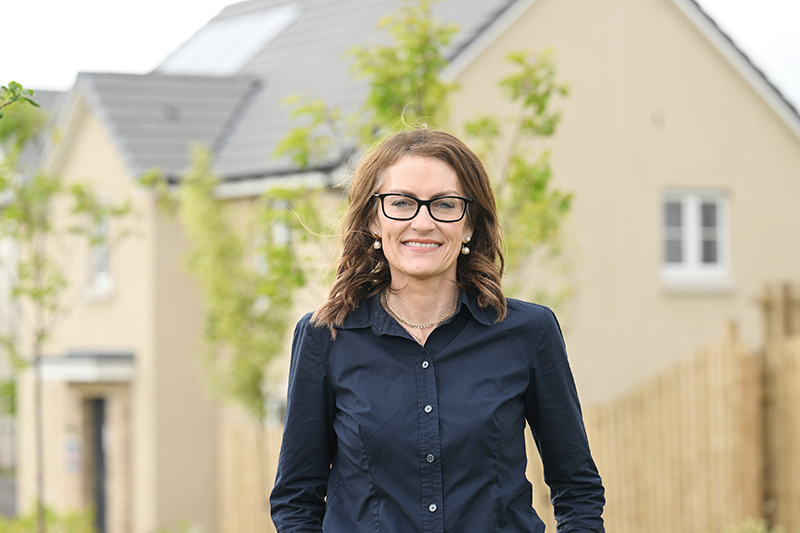
Alison Condie, regional MD of Barratt Redrow, said the move to provide record levels of investment across the housing sector aligns with the group’s strategy to provide quality, sustainable homes but also supports the provision of jobs, skills development and will benefit local economies across Scotland.
Alison Condie said, “The Scottish Government’s commitment to record levels of investment in affordable, liveable, and energy-efficient homes is a positive step, and it aligns with our mission to deliver high-quality, sustainable homes across Scotland. Investment in new homes is critical not only for families but also for jobs, skills development and local economies across Scotland.”
David Alexander, CEO of property business DJ Alexander Scotland, described the budget as a ‘missed chance’ to set out a coherent and effective housing strategy for the next five years.
“While the promise of record levels of investment for affordable housing of £4.9 billion for 36,000 homes over the next four years is an improvement, it does little to address the long-term stagnation in the building of homes for the social housing sector,” he added.
“Given that the housing emergency in Scotland will be two-years-old in May when the Scottish elections are held, this was an opportunity to offer a coherent, well-constructed strategy to deal with the shortage of homes. But with no additional help for housebuilders or for the private rented sector (PRS), which is an integral part of resolving the housing emergency, this is a missed opportunity.”

Faisal Choudhry, head of residential research at Savills, looked at how the measures included in the budget are likely to influence Scotland’s residential property landscape.
He said, “The budget has provided clarity, enabling buyers and sellers to move forward with confidence into the forthcoming spring selling season. Buyers will be relieved that LBTT rates will remain unchanged in the coming tax year, following last year’s increase to the Additional Dwelling Supplement.
“However, the introduction of two new high‑value council tax bands for properties above £1 million from 2028 will affect 0.4% of Scottish housing stock, according to Savills research. Further detail is still required on how these bands will be implemented by local authorities. While the move maintains stability for the vast majority of taxpayers, it is likely to be less welcome among homeowners in higher‑value locations.”

Homes for Scotland said builders have been left ‘frustrated’ by the budget, with chief executive Jane Wood lamenting the lack of announcements regarding ‘bold’ initiatives to tackle the housing emergency.
“It was extremely encouraging to hear the cabinet secretary for finance talk of ‘new hope for young Scots looking for their first home’. The budget document itself also emphasises ‘all-tenure’ ambition and details £66m in financial transactions for housing,” Jane Wood commented. “However, the lack of detail on what this will mean in practice is extremely frustrating.
“With home building levels now at or near historic lows, the only feasible way out of the housing emergency is to build significantly more homes across private and social sectors. Key to this is confidence for both new and existing investors, on which we have been working closely with the Scottish Government but I am afraid today appears to be a missed opportunity to announce the bold initiatives that we believe would significantly stimulate construction.
“Support for first time buyers (previously provided by the First Home Fund) is absolutely fundamental. It remains to be seen whether this will be forthcoming to give young people the hope the budget statement alluded to. As we approach May’s election, we urge all parties to come forward with policies which deliver the homes Scotland needs.”

The Existing Homes Alliance (EHA) described the Scottish budget as a ‘missed opportunity’ to reduce fuel poverty despite support for homeowners including increased funding for energy efficiency and decarbonisation.
Lori McElroy, chair of the Existing Homes Alliance, said, “While we welcome the ongoing support to help homeowners, landlords and tenants to make their homes warmer, healthier and more affordable to heat, this remains a drop in the ocean when we have over 800,000 households living in fuel poverty and 44% of Scotland’s homes falling below Energy Performance Certificate band C.
“Scotland has excellent fuel poverty and energy efficiency programmes such as Warmer Homes Scotland, Area-based Schemes and the Social Housing Net Zero Heat Fund, as well as generous grants through the Home Energy Scotland Grant and Loan Scheme, but the gap between what is needed and what is currently being delivered is wide.
“This budget, as it stands, is a missed opportunity to significantly scale up these programmes which would reduce fuel poverty, improve public health by tackling damp and mould, and prepare the workforce and supply chains needed to deliver our climate change targets – supporting thousands of jobs and economic opportunities across Scotland.”
The Scottish Federation of Housing Associations welcomed increased long-term funding for the housing budget but warned the system needs a ‘radical overhaul’ to tackle the housing emergency.
SFHA chief executive Richard Meade said, “The Scottish Government’s draft budget confirms a continued commitment to affordable housing, with £4.1 billion in public funding for the Affordable Housing Supply Programme over four years, and this progress is appreciated. However, a closer look at the spending review shows that much of the increase is back-loaded towards the end of the period.
“Once construction costs, inflation, labour shortages and regulatory pressures are taken into account, funding in the early years of the programme appears broadly flat in real terms. This risks slowing delivery at precisely the point when we need to accelerate the building of affordable and social homes.
“We need to see an £8.2 billion commitment over the course of the next Scottish Parliament, alongside a radical overhaul of the housing system, if Scotland is to build the 15,693 affordable homes it needs to respond effectively to the housing emergency. We will continue to make the case for greater investment in affordable housing in Scotland so that everyone can have a safe, warm affordable home.”