

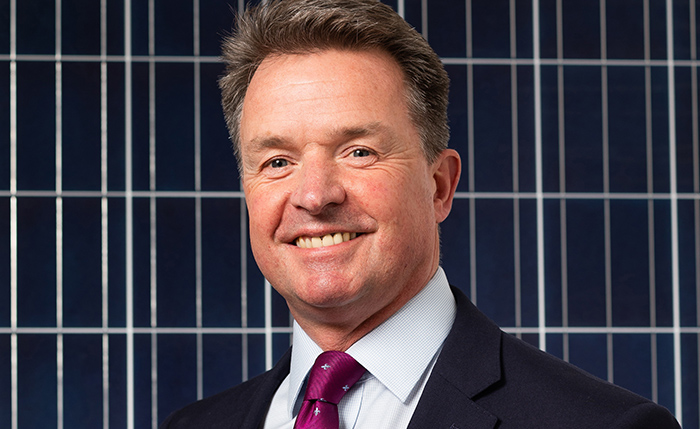
By John Forster, founder & chair, Forster Group
AS we enter 2026, the construction sector stands at the centre of the UK’s most urgent social and economic challenges. Whether it is resolving the housing crisis, accelerating the energy transition, or retrofitting homes and buildings for net‑zero, the message from policymakers, industry bodies and clients is the same: we need to scale up.
But the real question is not whether we need more capacity. It is whether we can build that capacity in a way that is genuinely sustainable – economically, operationally and environmentally. Scaling up alone will not deliver the outcomes Scotland needs. What we need is sustainable scale.
This distinction matters. Too often, ‘scale’ is interpreted simply as ‘doing more’, whether that’s more houses, more installations, more retrofits. But unless that activity is delivered with the right skills, to the right standards and using the right solutions, we risk repeating the mistakes of the past – inefficiency, rework, skills shortages and a race to the bottom on cost. Sustainable scale is about building the capability to deliver more and deliver better.
Every major transition the UK faces, from decarbonising heat to expanding renewable energy infrastructure, depends on tradespeople. Electricians, joiners, plumbers, roofers: these are the professions that will physically deliver the future we are planning for.
Yet the industry has long talked about skills shortages as if they are inevitable. Our experience at Forster Group suggests otherwise. With a trades workforce whose average age is just 30, we have shown that construction can recruit, retain and develop the next generation when it invests in apprenticeships that are both affordable and effective. High completion rates are not a pipe dream; they are the result of a sustainable model that supports apprentices from entry to qualification and beyond.
If Scotland is serious about scaling up, then building a resilient skills pipeline is not optional. It is the starting point.
Sustainable scale also means raising standards. Like many across the construction sector, we’ve invested time and money in returning to fix what was not done correctly the first time. In a period where every hour of labour and every pound of investment counts, this is simply unsustainable.
Yet procurement practices often push in the opposite direction. The ‘flight to value’ – where lowest price becomes the dominant factor – rarely leads to the best outcomes. It can compromise material quality, workmanship and long‑term performance. If we want scale that lasts, we must reward quality, not just cost.
At Forster Group, our own standards framework and plot‑pack approach are designed to ensure consistency, clarity and right‑first‑time delivery. But this is not just about one company’s methods. It is about a sector‑wide shift in mindset: scale without standards is not scale at all.
The third pillar of sustainable scale is innovation. We cannot meet 2026’s demands with 2016’s methods. Digital tools, automated processes and off‑site manufacturing are no longer emerging technologies, they are essential enablers of capacity.
Encouragingly, Innovate UK’s new funding line for pre‑commercialisation projects signals a recognition that innovation must be supported not just at the prototype stage, but at the point where it can be deployed at scale. For SMEs in construction and energy, this support is vital. Innovation only delivers impact when it reaches the market.
If there is one message the industry must embrace in 2026, it is this: we cannot scale by doing what we have always done. Sustainable scale requires us to think differently about skills, standards and solutions and to recognise that these are not separate challenges but interconnected parts of the same system.
Scotland has the opportunity to lead the way. But leadership will depend on our willingness to build capacity that is not only bigger, but better.