

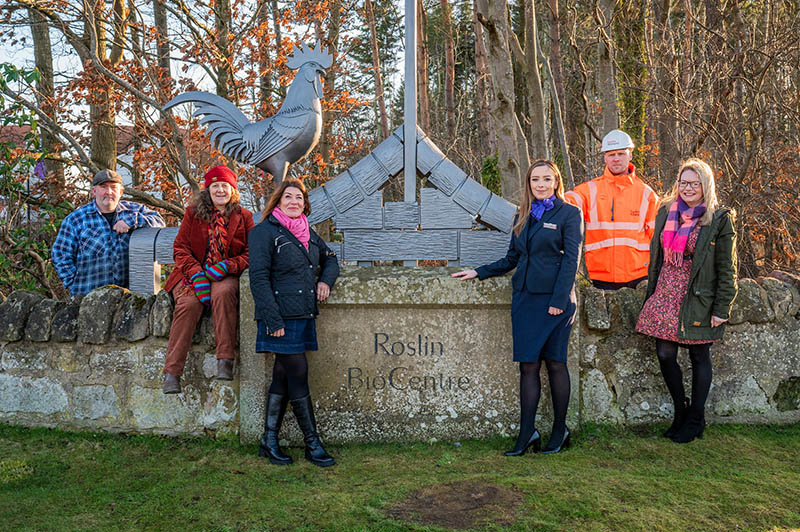
TAYLOR Wimpey East Scotland has completed and installed two pieces of community artwork at its Sinclair Gardens development in Roslin, Midlothian.
The move marks a milestone as the site nears completion, and provides the housebuilder’s ‘Per cent for Art’ commitment to the village as part of planning consent for the project.
Crafted from steel with a galvanised and painted finish, the installations pay tribute to the development’s scientific heritage. The artwork reflects the area’s former use as part of the Roslin Institute, the research centre formed by the amalgamation of the Poultry Research Centre and the Animal Breeding Research Organisation. One of the centrepieces — a stylised sheep — has been created to echo the legacy of Dolly, the world’s first cloned mammal, who was born at the Institute.
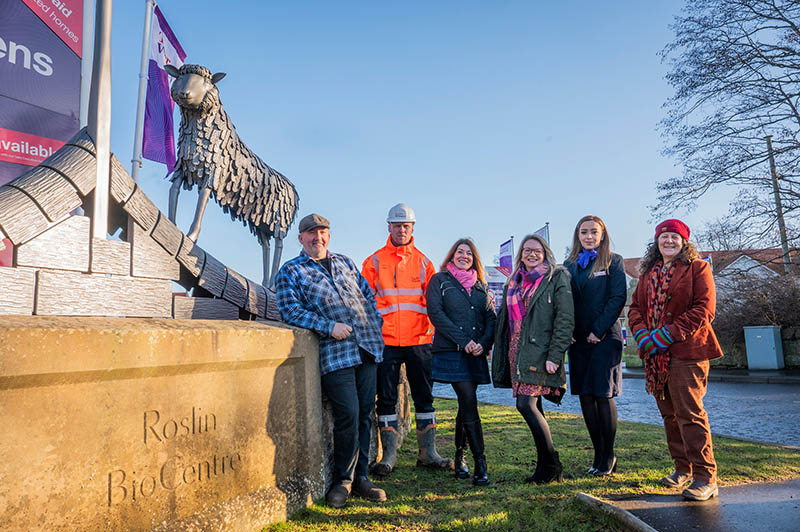
Pete Hill and Shona Johnson, the artist blacksmiths from Ratho Byres Forge, who designed and created the structures, said, “It’s been a privilege to produce work that honours such an important chapter in Roslin’s scientific story. The pieces are designed to feel rooted in the landscape while also sparking curiosity about the groundbreaking research that once took place here.
“Creating the sheep in tribute to Dolly was particularly special — it’s a symbol recognised around the world, and we wanted to capture that sense of innovation and pride.”
Pauline Mills, technical director for Taylor Wimpey East Scotland, added, “We’re proud to honour Roslin’s scientific legacy through these unique installations. The artwork not only enhances the character of Sinclair Gardens but also celebrates the extraordinary innovation that took place here and its local connections to the many people who live within our development and in the village of Roslin itself. I’d also like to take this opportunity to thank the members of the local community council, whose input on the artwork’s final design was key to ensuring its accuracy.”