
A new £25 million fund focused on the River Clyde corridor has been launched to support the clean energy transition.
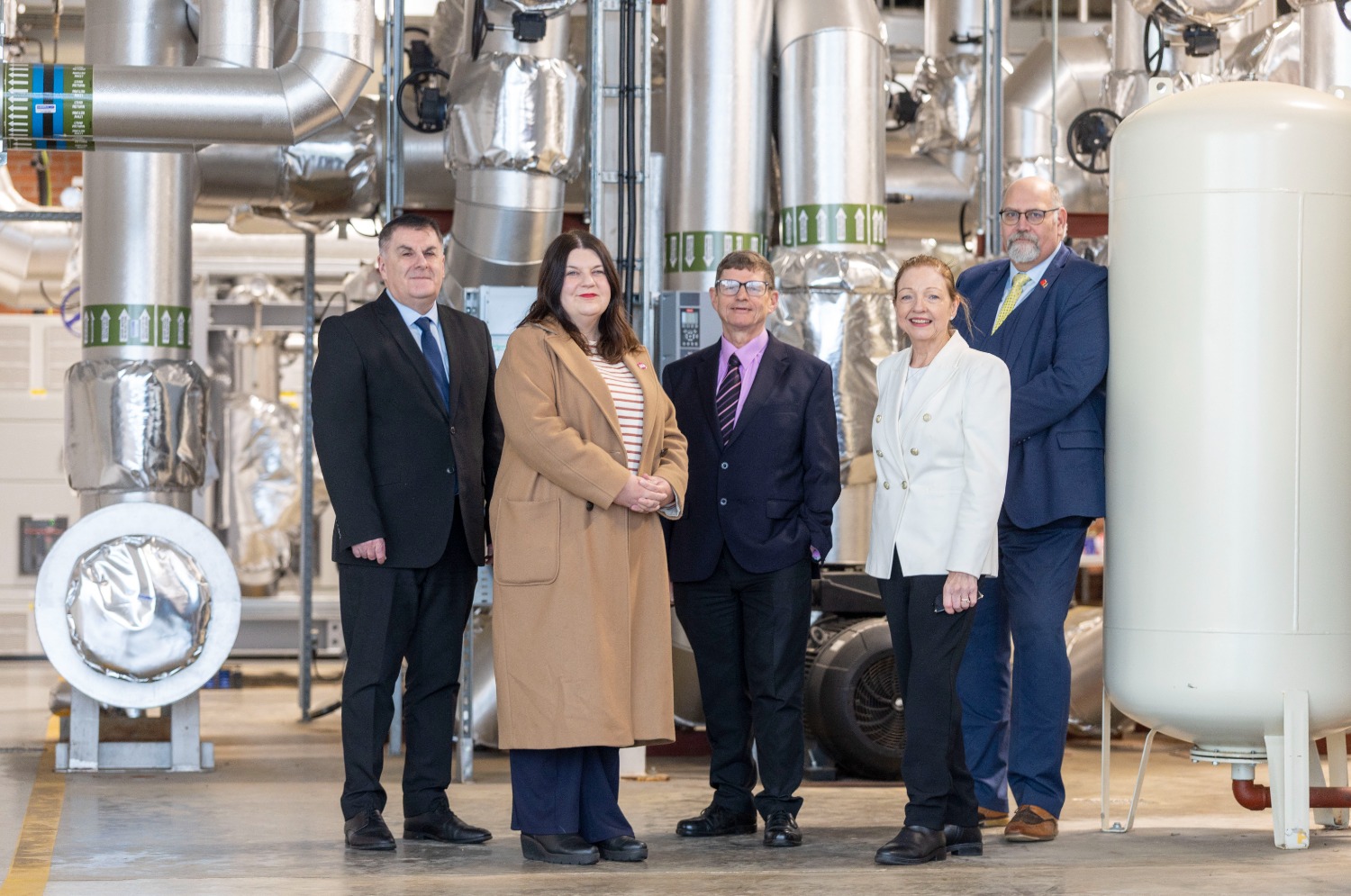
Local leaders met at the Queens Quay Energy Centre in Clydebank to launch initiative designed to support and accelerate the transition from fossil fuel heating to low-carbon alternative heating systems.
Focused specifically on the river corridor as part of a £40 million Scottish Government investment in the Clyde Mission programme, the new Heat Decarbonisation Fund will offer capital grants for clean energy initiatives such as new or upgrades to district heating networks, contributing to regional and national carbon reduction targets.
Leaders enjoyed a tour of West Dunbartonshire Council’s energy centre, which supports a district heating system and features Scotland’s first major water source heat pump, which draws water from the adjacent River Clyde. This generates clean heating to nearby local homes and businesses through a system of buried piping.
Deputy first minister Kate Forbes said, “The River Clyde has been at the heart of Scotland’s industrial heritage and now it will be central to our clean energy future. This funding, provided by the Scottish Government, will support innovative projects as part of the transition from fossil fuel heating to low-carbon alternatives – a key action in our recently published draft climate change plan.
“By investing in district heating networks and renewable energy generation, we’re reducing carbon emissions, creating opportunities for sustainable economic growth and tackling fuel poverty. This will benefit communities along the Clyde and beyond.”
Susan Aitken, chair of the Glasgow City Region Cabinet and leader of Glasgow City Council, added, “The decarbonisation of heat is crucial to our net zero ambitions. It can also help address energy costs and security for the many businesses and communities across the Clyde Mission corridor, especially low-income households. The Heat Decarbonisation Fund can be a major step towards delivering a cleaner, greener and fairer future.
“It’s fitting also that the fund is part of Clyde mission, which is becoming critical to unlocking the social and economic potential of the river corridor. Today’s location, the Queens Quay Energy Centre, alongside projects like the Govan-Partick bridge, our world-class innovation districts and the Barclays Campus, illustrate the continuing transformation of the Clyde – and the city region.”
Over 100,000 people, 160,000 jobs, and 6,600 companies are based within a few hundred metres of the River Clyde.
The legacy of de-industrialisation and climate change continue to present challenges and constraints to the corridor’s full potential. One fifth of people within the river corridor live in some of the most deprived parts of Scotland and over 400 hectares of vacant and derelict land fall alongside the Clyde.
Led by Glasgow City Region and Argyll and Bute Council, Clyde Mission aims to revitalise the River Clyde corridor.
Work is underway to develop a masterplan for the river, a key part of the Clyde mission programme, which will engage with key stakeholders and explore and develop how best to make the Clyde an engine of sustainable and inclusive growth. The exercise will conclude with a set of recommendations to address the programme aims.
The Heat Decarbonisation Fund is now live, with full details including eligibility criteria, detailed guidance and how to apply available on the Glasgow City Region website. Applications for the first phase of funding will close in February 2026 for assessment with successful projects confirmed in March 2026.